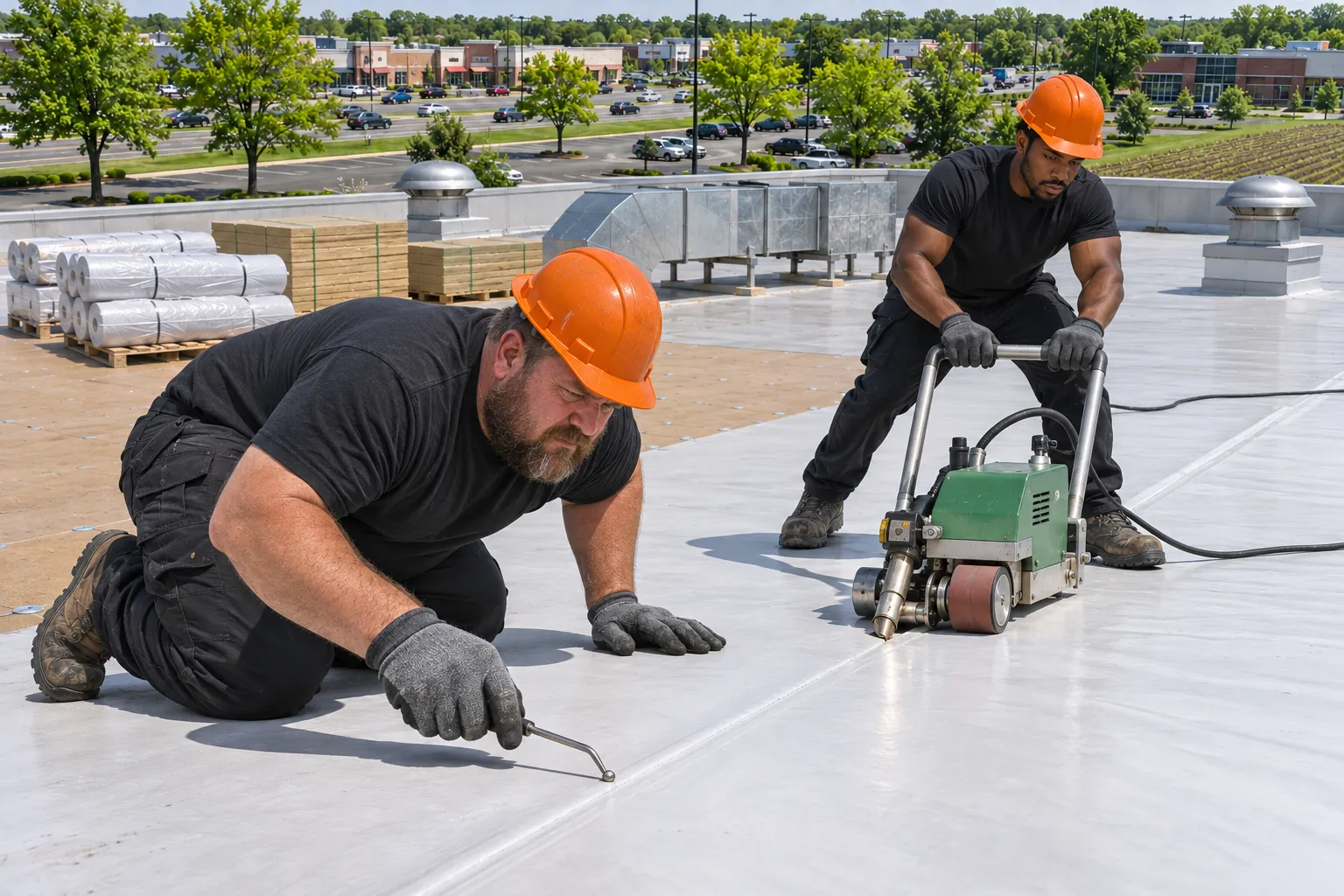
White single-ply sheet with hot-air welded laps, installed fastened or adhered over new insulation on warehouses, strip centers, and newer office roofs.
- Roofs that bake in July sun
- Recover jobs over one dry layer
- Busy roofs with welded seams
Our commercial roofing services in Merrillville cover TPO, EPDM, industrial, and metal roofs, plus full tear-off and replacement when the old roof is past repair.
Pick the system by the roof itself. Commercial roofing services in Merrillville start with slope, traffic, and what sits on the deck.
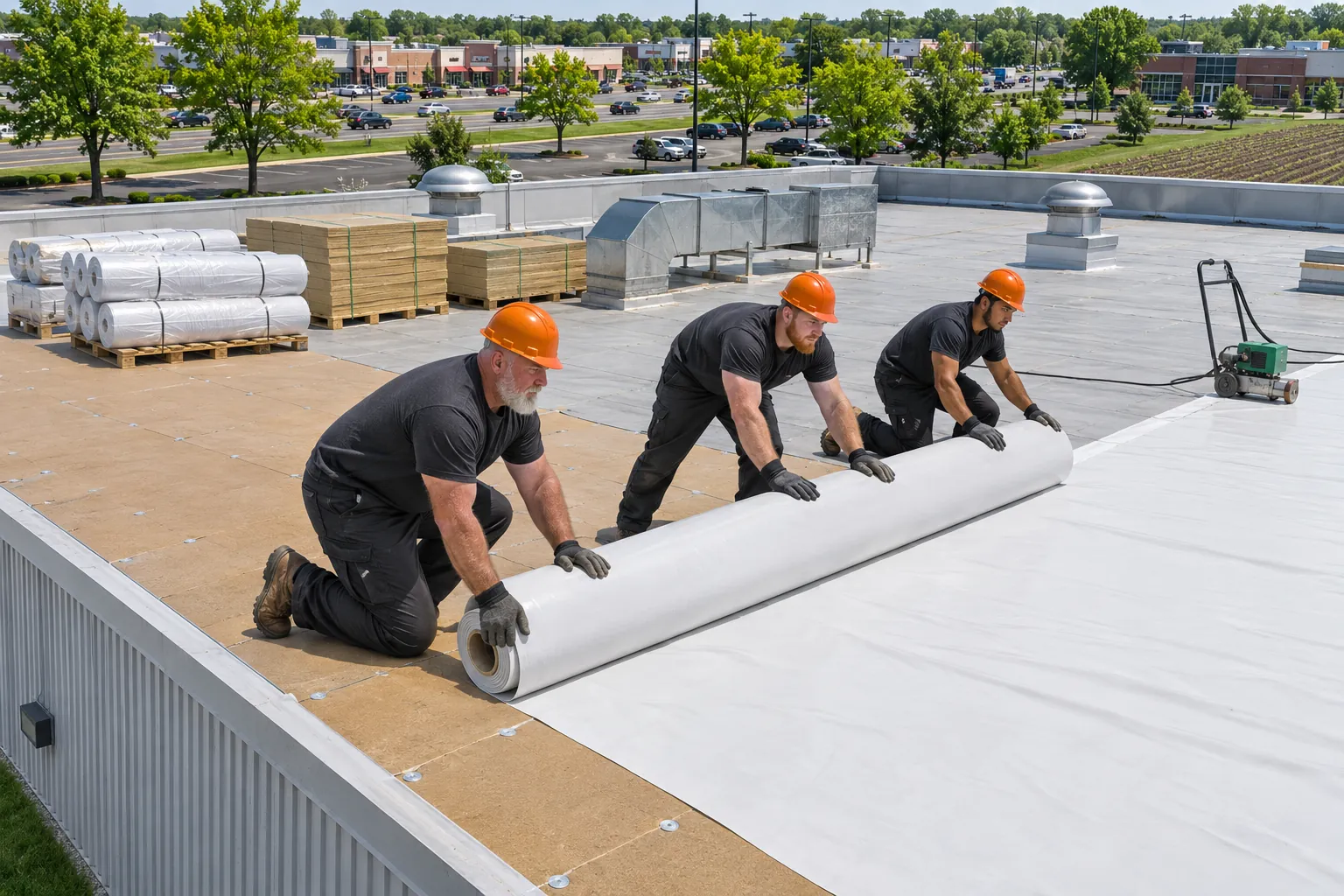
White single-ply sheet with hot-air welded laps, installed fastened or adhered over new insulation on warehouses, strip centers, and newer office roofs.
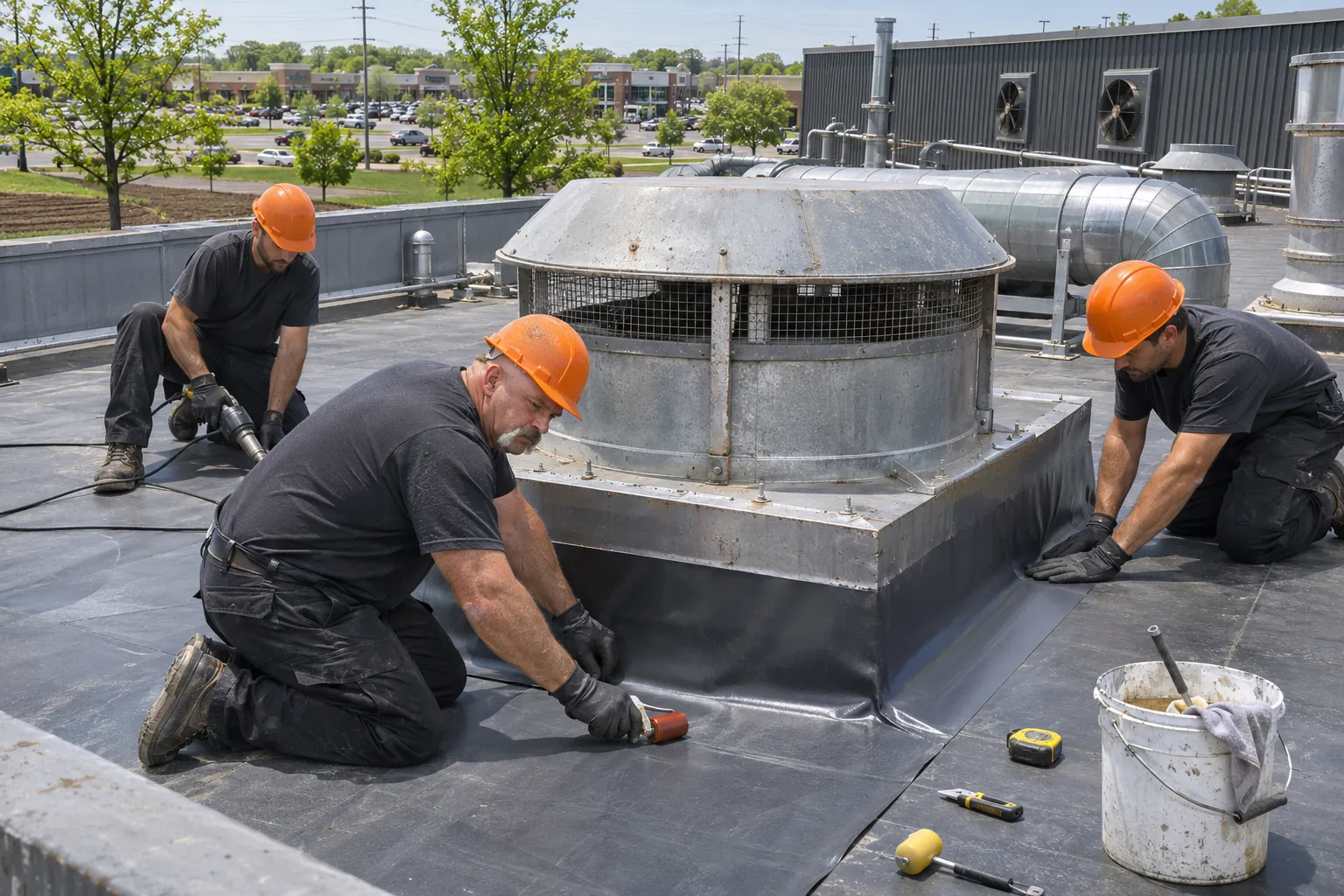
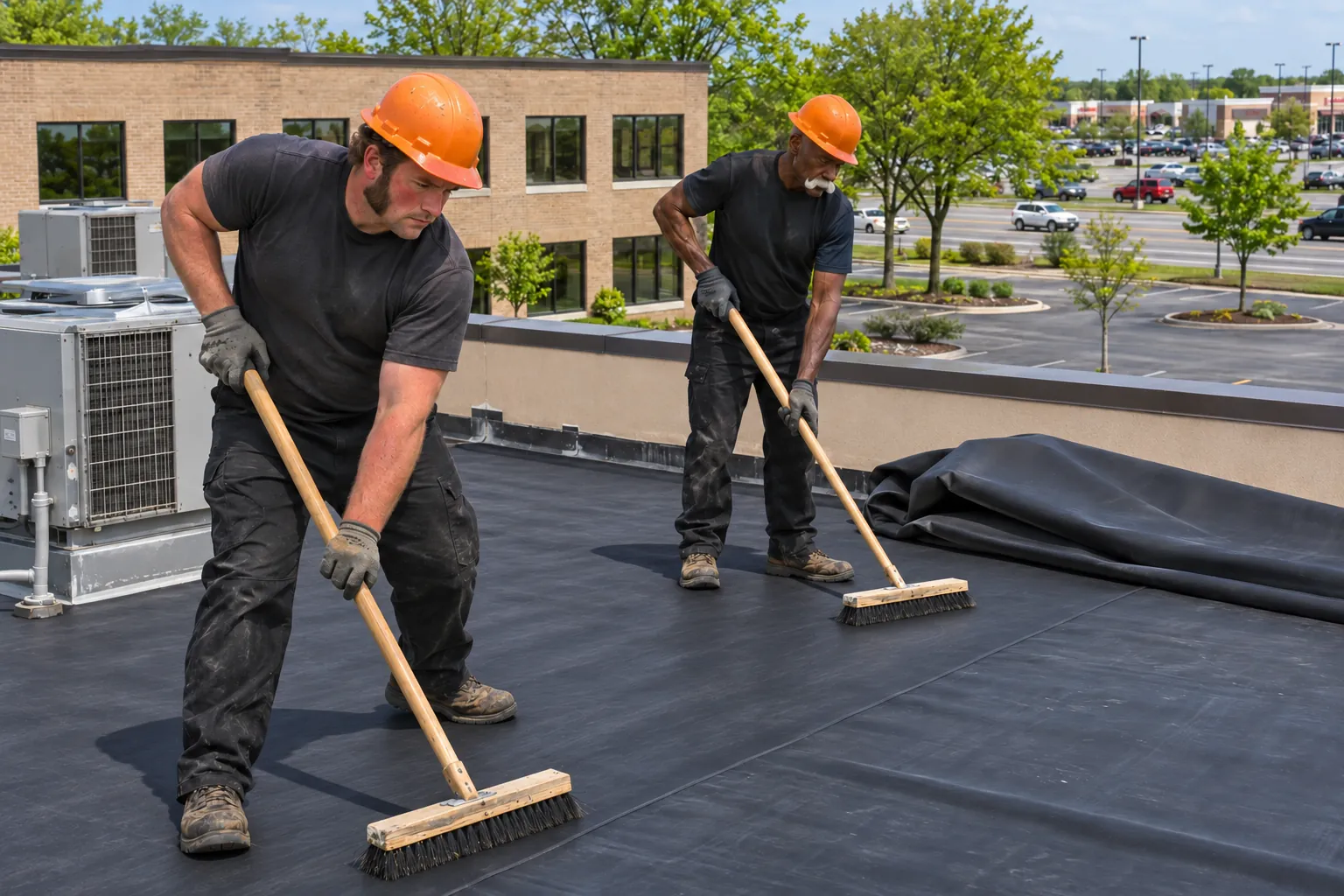
Synthetic rubber in wide sheets, glued down or held by ballast, chosen for roofs that see hard freezes and owners who expect to patch rather than replace.
Large roofs over production and storage, laid out around curbs, ducts, and stacks, with cover board and walkway pads where technicians and parts move every week.
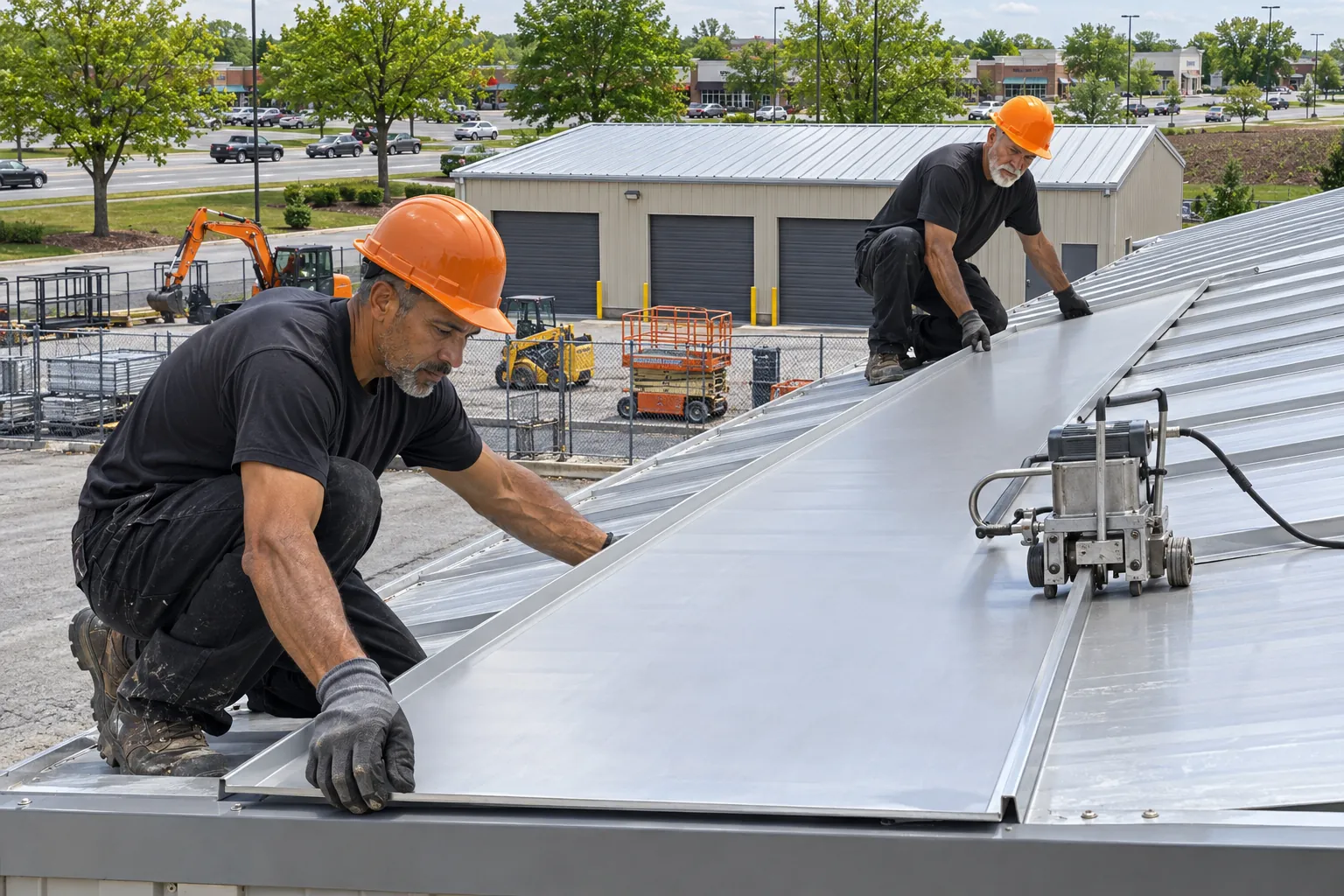
Panels for pitched commercial roofs, from concealed-fastener standing seam on offices to exposed-fastener panels on storage buildings, barns, and shops.
Replacement is its own job, listed here because it can use any of the four systems above, chosen after the old roof comes off.

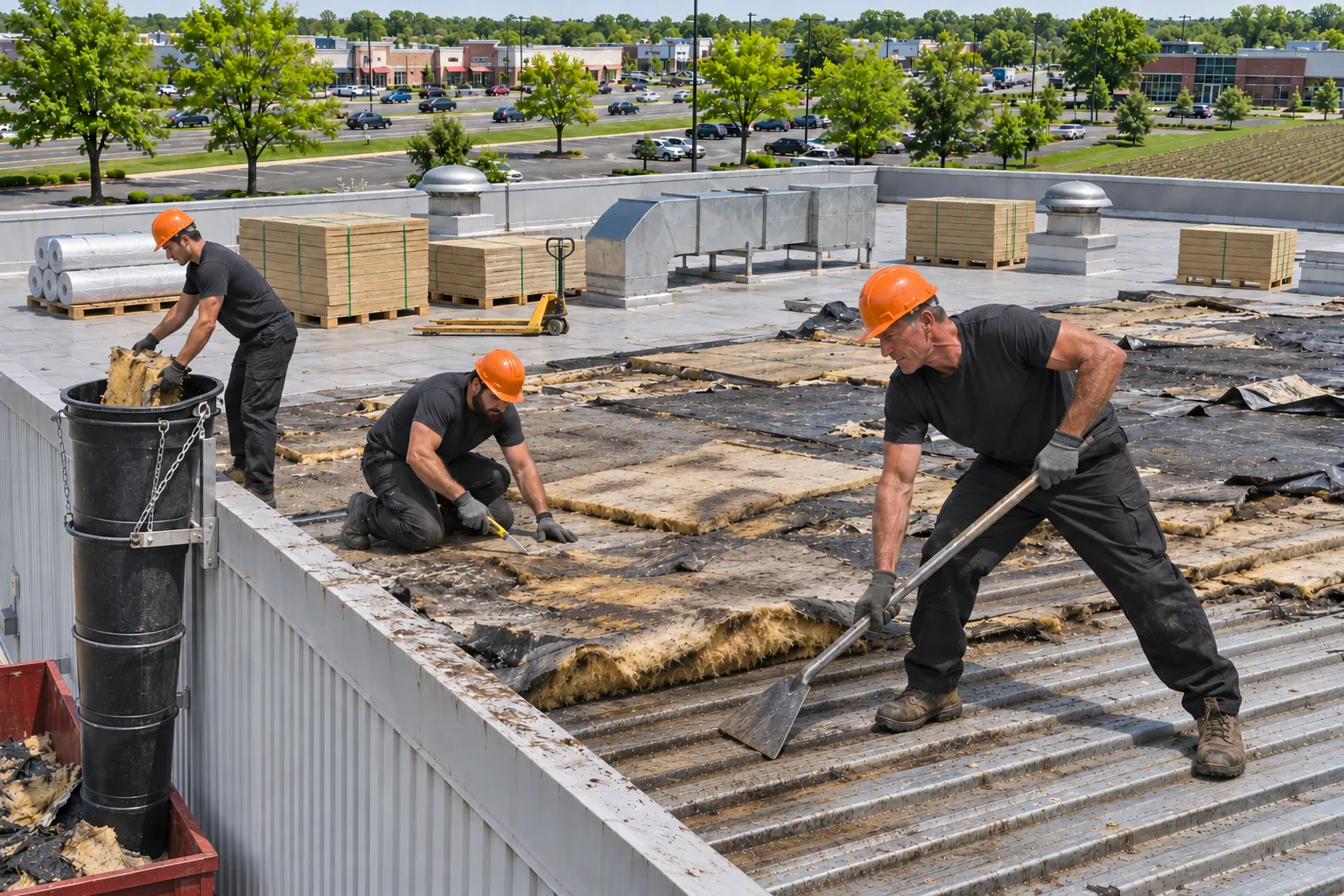
Replacement makes sense when leaks return in several areas, insulation is wet across the field, or the roof already carries two layers. Core cuts show which sections are dry and which come off to the deck.
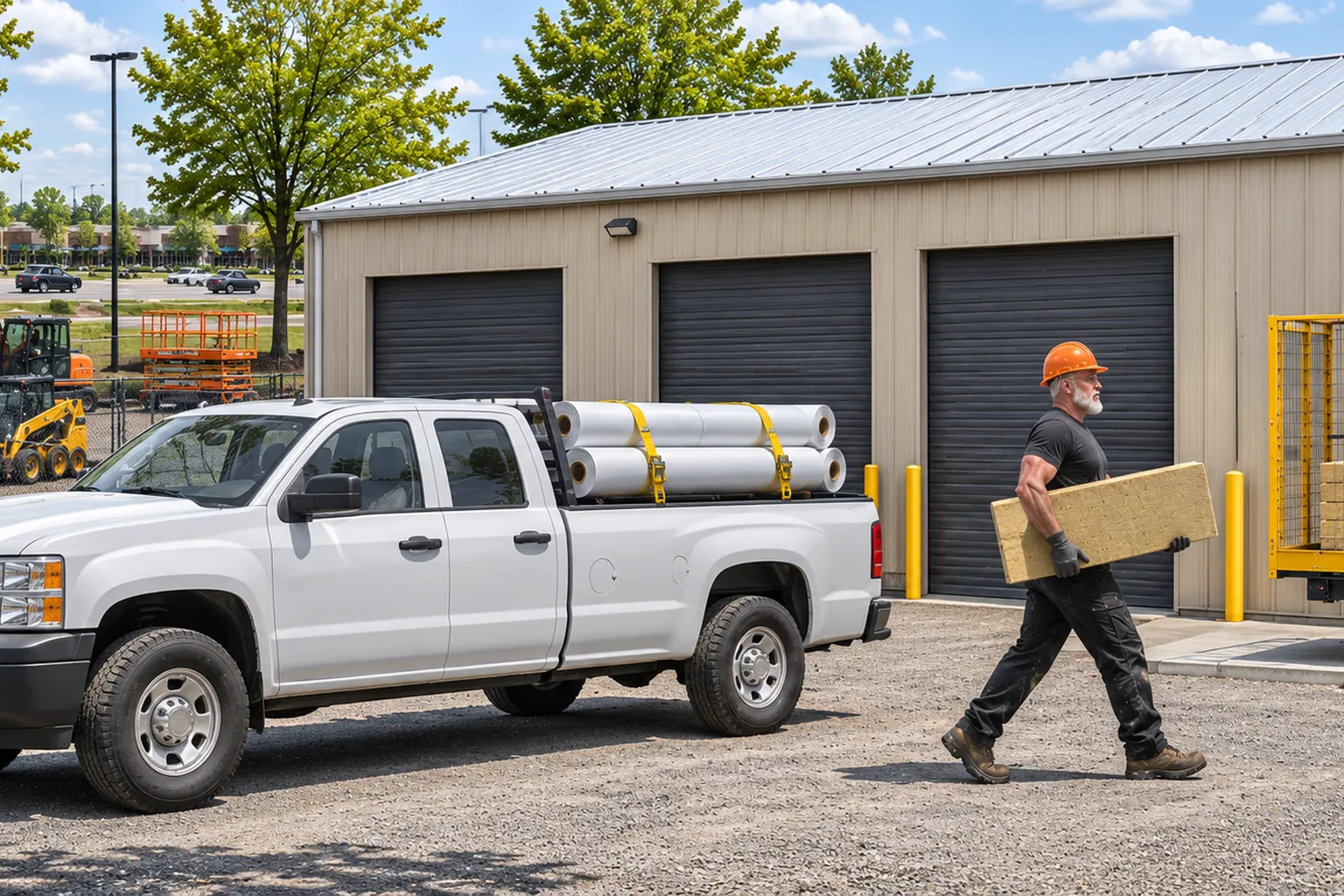
Tear-off is planned in day-sized sections. The crew removes old layers, repairs the deck, sets tapered insulation for drainage, and installs the new membrane or panels before moving on.
A quick read of how each system lines up with common roof conditions. The roof walk settles the details.
| What You See On The Roof | TPO | EPDM | Metal Panels |
|---|---|---|---|
| Flat roof with many rooftop units and service traffic | Usually Fits | Sometimes | Rarely |
| Low-slope roof with deep snow drifts at high walls | Sometimes | Usually Fits | Rarely |
| Pitched roof on an office, shop, or barn | Rarely | Rarely | Usually Fits |
| Flat roof that ponds and needs added slope | Sometimes | Sometimes | Usually Fits |
| Plant roof with exhaust residue near fans | Sometimes | Sometimes | Sometimes |
Fits are general guides. Exhaust residue, deck strength, and slope are confirmed on the roof before a system is chosen.

Book the roof walk early. Core cuts and a written scope give you a number for the budget and time to line up tenants.
Get A Free EstimateThe same five steps apply to every system, from a single storefront roof to a full plant.
We measure the roof, cut cores at suspect areas, and note slope, drains, and each penetration so the scope reflects real conditions.
The roof walk results point to TPO, EPDM, or metal, and to recover or tear-off, and the scope explains why that system fits.
Work is split into sections the crew can open and seal in a day, booked around deliveries, tenant hours, and weather windows.
Deck repairs, insulation, membrane or panels, then flashing at walls, curbs, and drains, with each seam probed or checked as it goes down.
A final walk with you covers the finished roof, and stage photos go into your building records for later maintenance.
Slope decides first: pitched roofs take metal panels, low-slope roofs take TPO or EPDM. Then foot traffic, rooftop equipment, and how cold the roof runs narrow it down. A roof walk with core cuts shows whether the old roof can stay under a recover or comes off.
Replace when leaks keep showing in different rooms, when insulation is wet in several areas, or when the roof already has two layers. One failed curb on a dry roof is a repair. Core cuts separate the two cases before any price is given.
Yes. The same job removes old layers, repairs the deck, installs insulation and the new membrane or panels, and flashes every curb and wall. Splitting it by section keeps the building dry while the work moves across the roof.
Sometimes. A recover over one dry layer is common with TPO and with metal on retrofit framing. Wet insulation, a second existing layer, or a soft deck means a full tear-off, and core cuts show which case your roof is in.
Roof size, layers removed, deck repairs, and weather set the length. A storefront roof might take a few days, while a large warehouse runs in phases over several weeks. The scope lists the sections and the order, so tenants and managers can plan around each one.
Pitched metal panels shed snow, while TPO and EPDM carry it on a flat deck and need tall flashing at walls where drifts build. On flat roofs, drain capacity and tapered insulation matter most, because meltwater keeps moving toward the drains for days after a heavy band.
Tell us the system you have now and what it is doing, and we will set up the roof walk.