Edge And Parapet
Shared parapets between storefronts crack at the coping, and water runs down inside the party wall to show up in the shop next door.
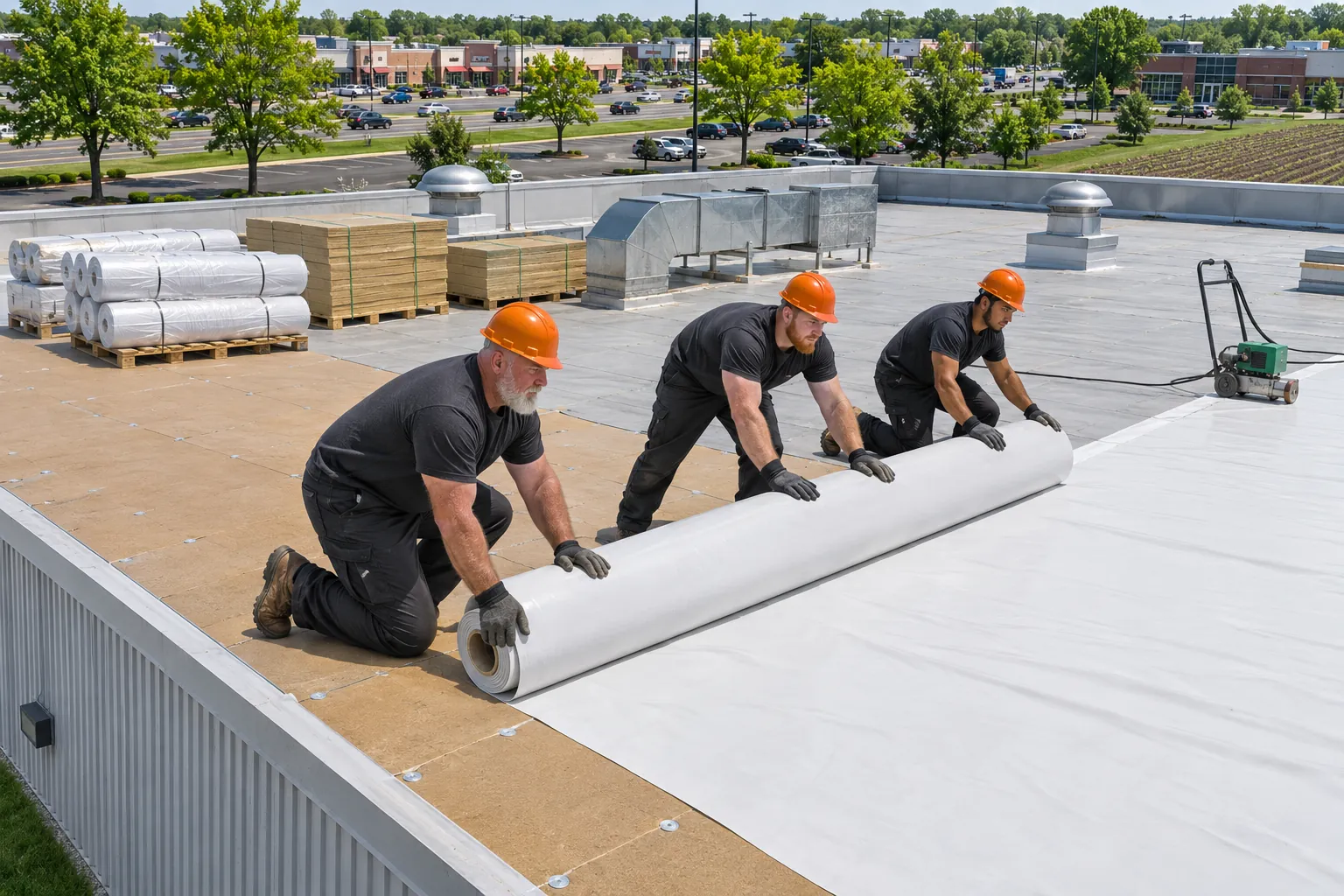
As a Crown Point commercial roofing contractor, we replace TPO, EPDM, and metal roofs on downtown storefronts, offices, and warehouses across the city.
Crown Point commercial roofing work often starts with a question about where the crane and the dump trailer can sit.
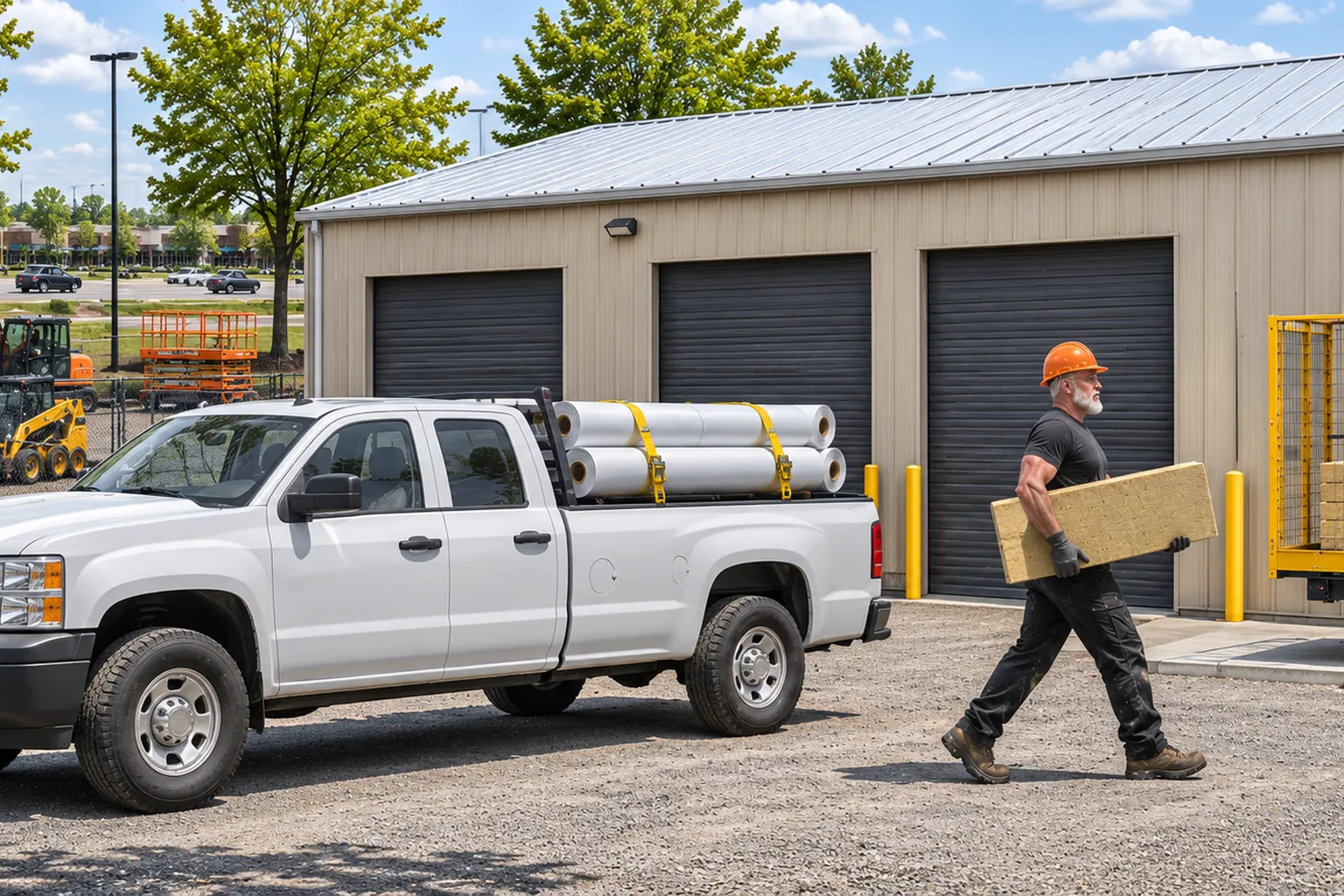
Crown Point is the Lake County seat, and its downtown blocks pack storefronts and offices wall to wall. Party walls, shared parapets, and alley-only access shape how material reaches the roof and how debris comes down.
Before tear-off, we agree with the owner on staging spots, sidewalk protection, and hours that keep entrances open for customers and visitors.
Older downtown roofs and newer warehouses fail in different ways. These are the zones we check first in Crown Point.
Shared parapets between storefronts crack at the coping, and water runs down inside the party wall to show up in the shop next door.
Built-up and patched membranes carry layers of old repairs, and laps between those patches open after a few freeze-thaw seasons.
Scuppers through masonry walls rust out or clog, so water backs up behind the parapet on flat downtown roofs.
Old vent stacks, abandoned curbs, and sign supports pierce downtown roofs and are often flashed with tar that has long since cracked.
Layers added over decades hide a soft or rotted deck, so core cuts on downtown roofs check how many layers sit over it.
A replacement planned around access keeps the building open and clears out decades of patching.
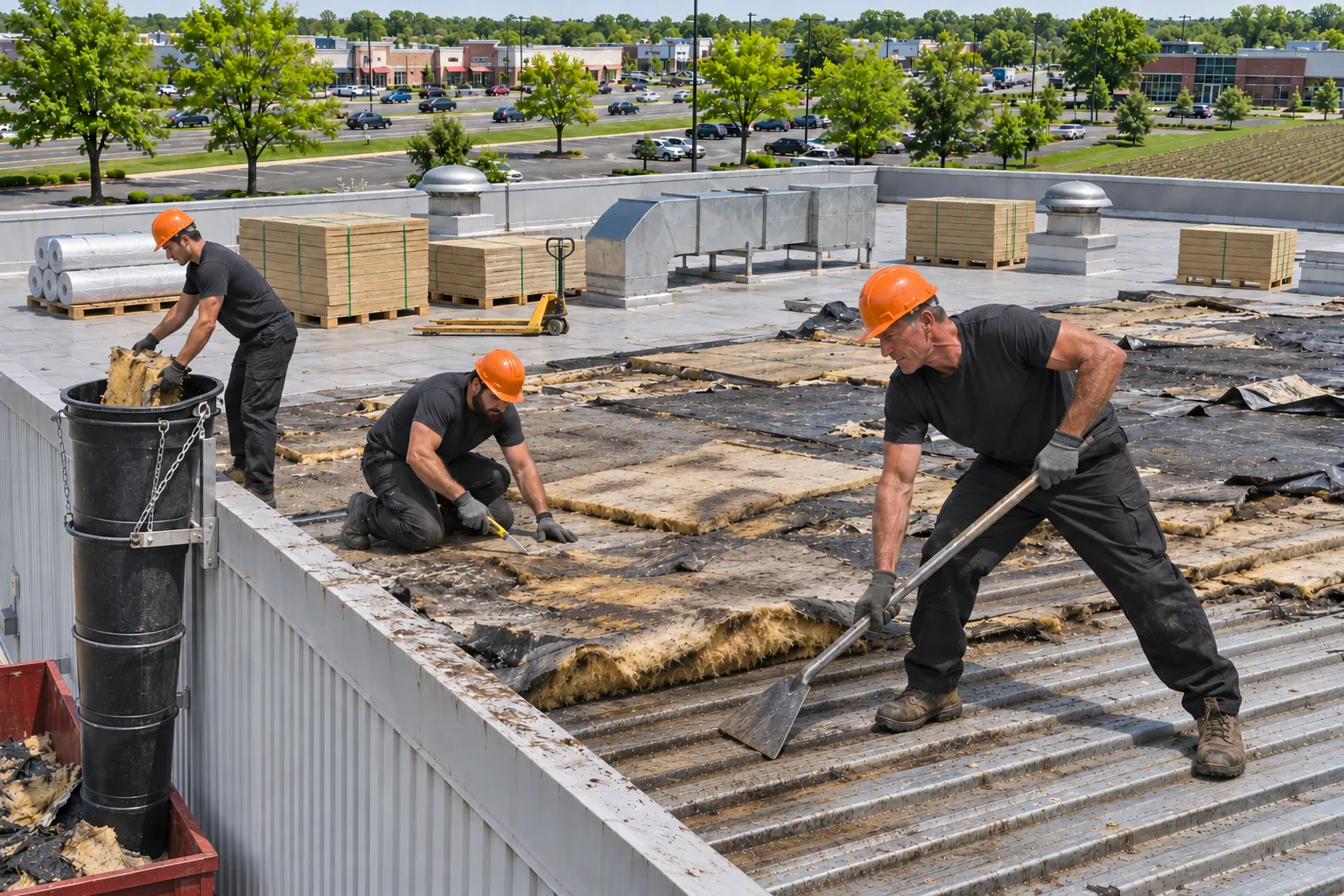
Debris chutes and sidewalk protection go where the owner agrees, so customers reach the door while the roof above is torn off.
Tear-off down to the deck removes stacked patches and lets soft decking be replaced instead of buried under another layer.
New coping and base flashing along shared parapets stop water from running into the next storefront through the wall.
Unused curbs and stacks are taken out and the deck is patched, leaving fewer holes for the new membrane to flash.
Four systems cover most Crown Point roofs, from small downtown flats over storefronts to large warehouse decks near the edge of the city.
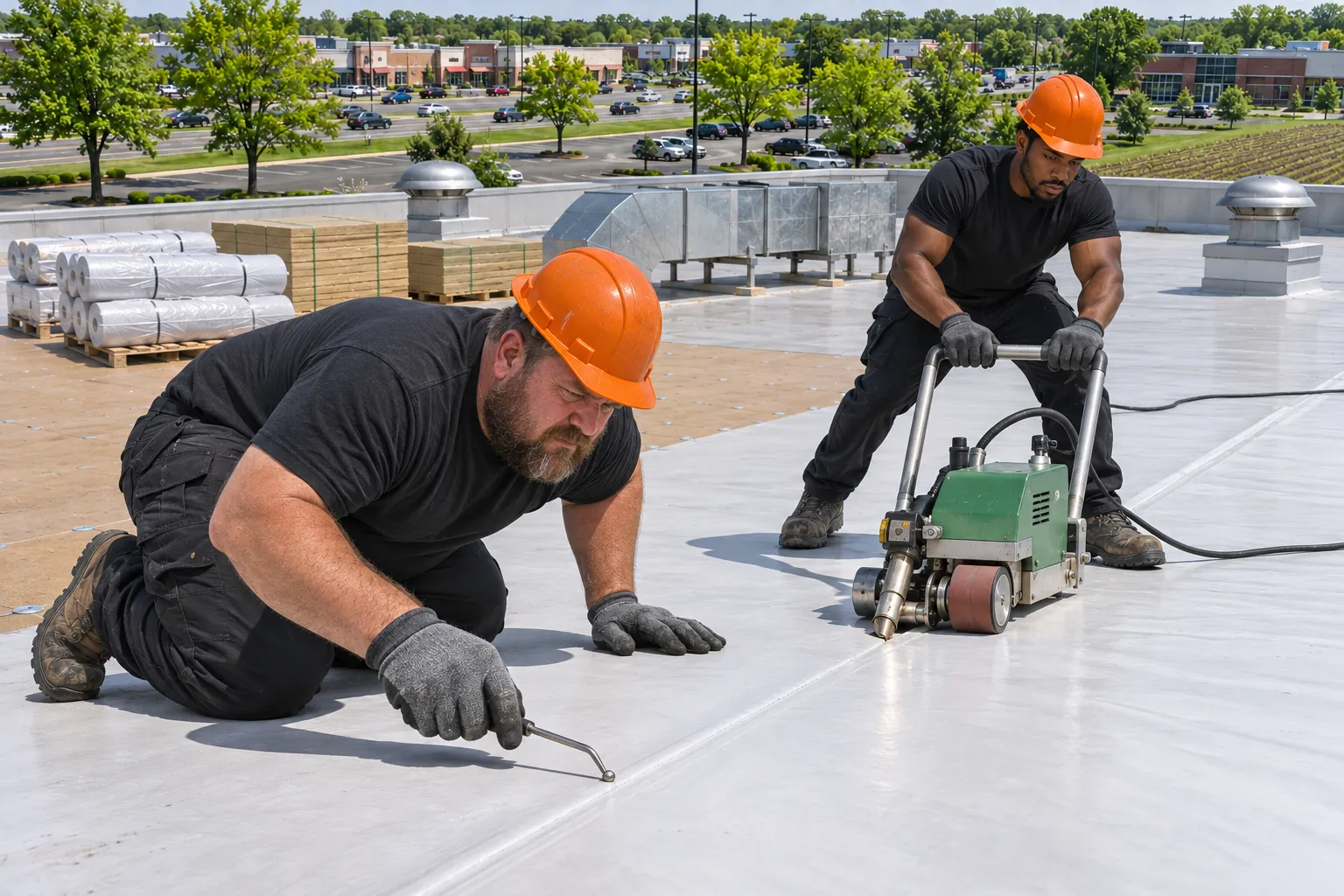
White welded sheet for warehouses near the city edge.
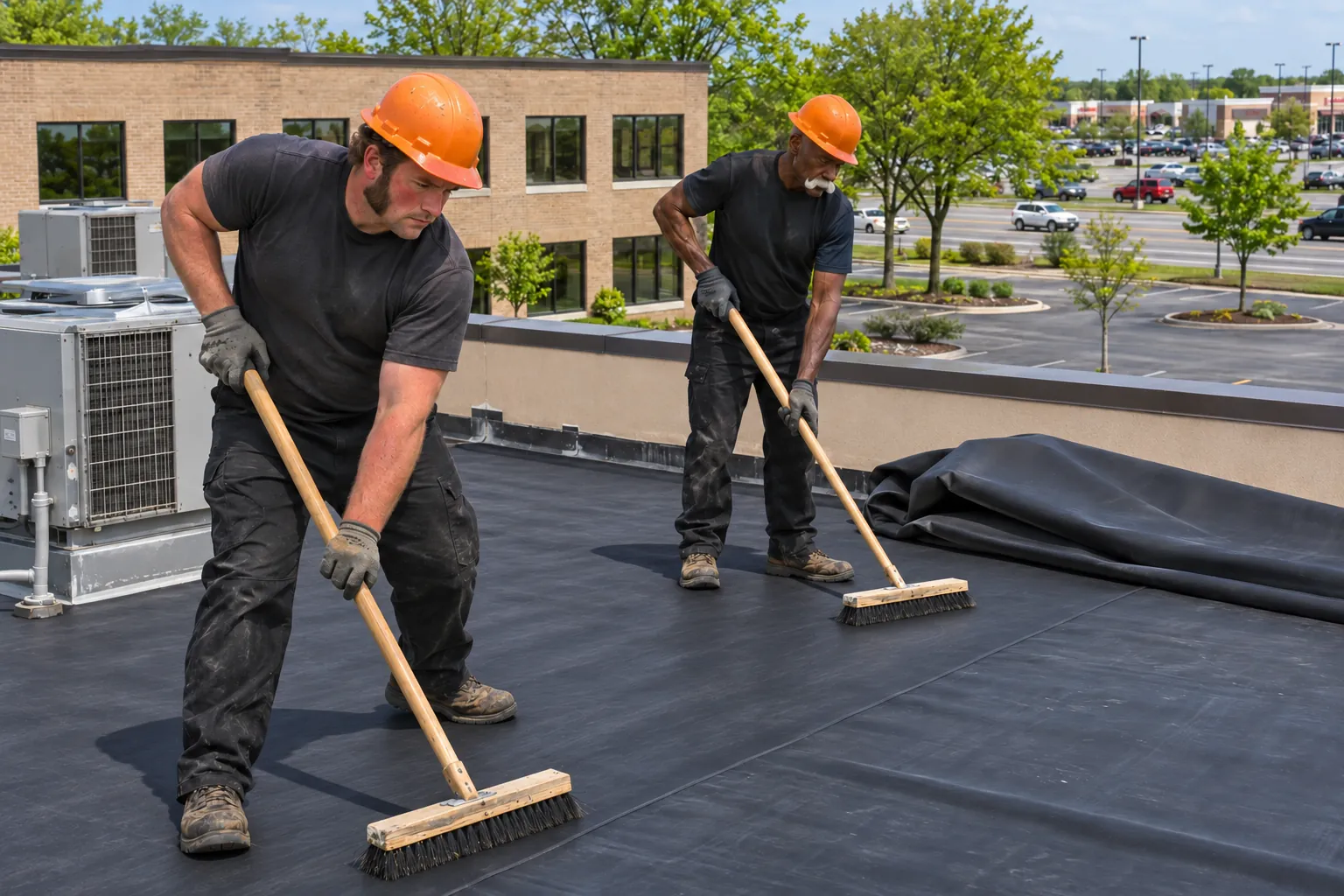
Rubber sheet for small downtown flat roofs.
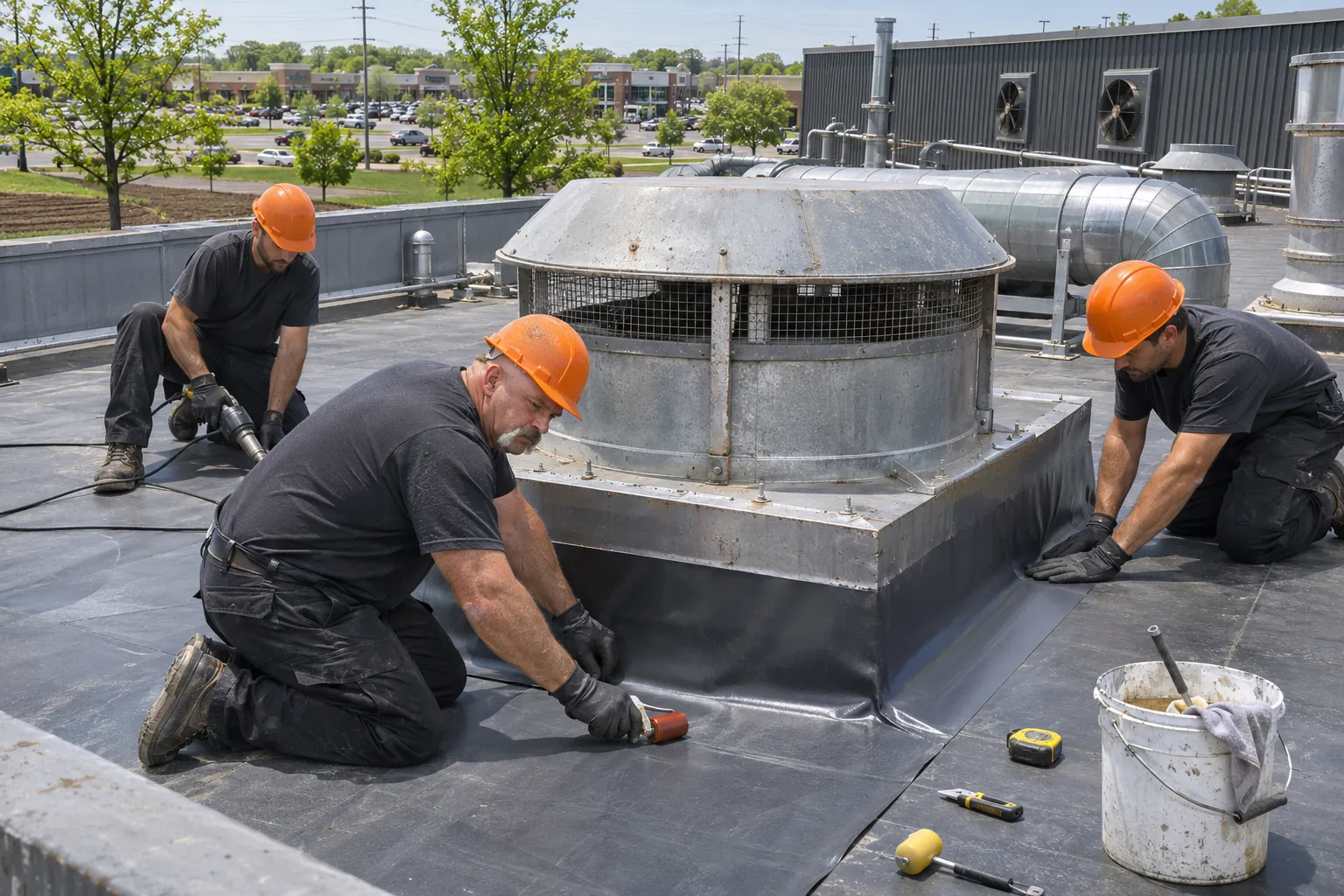
Equipment-heavy roofs on plants and distribution sites.
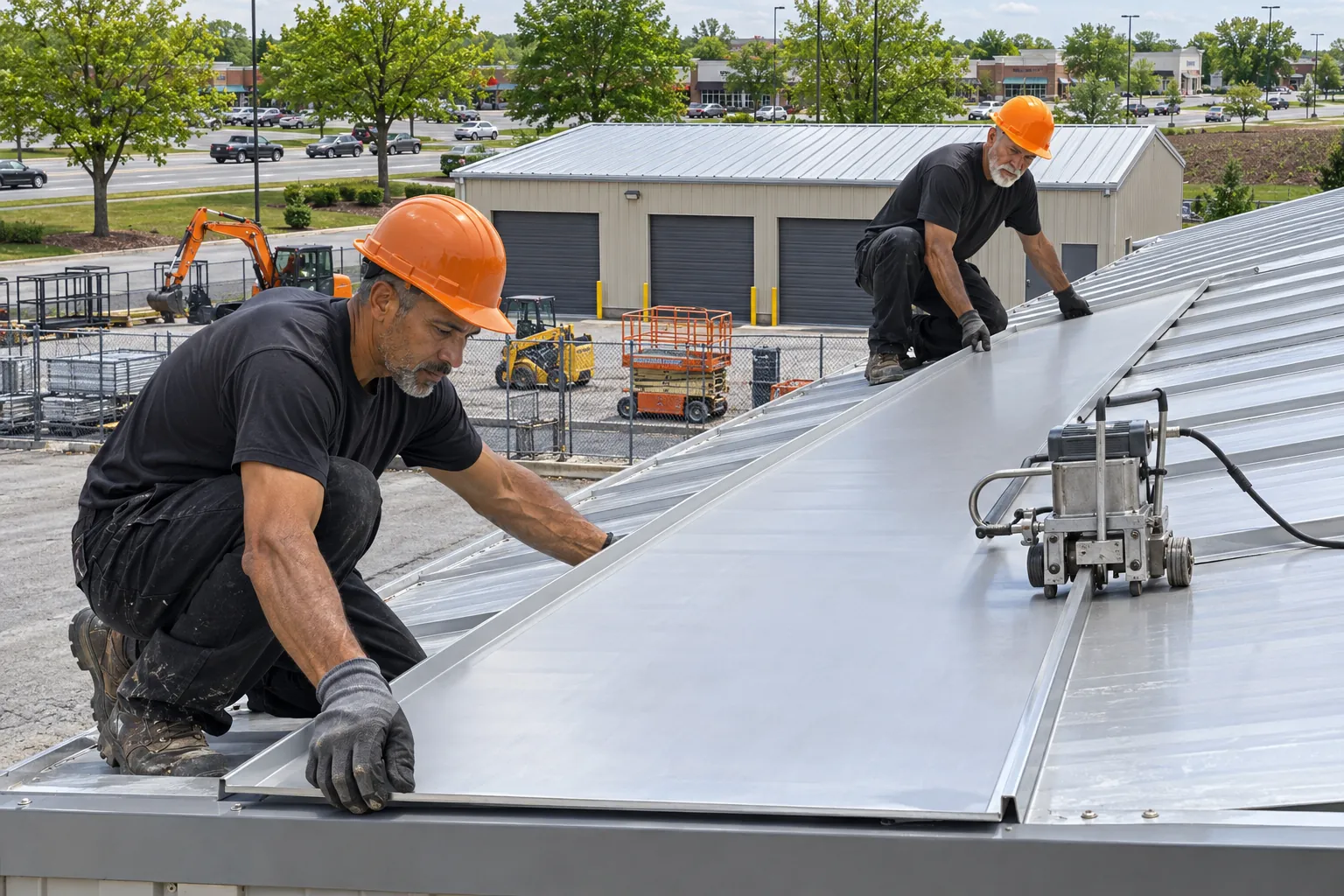
Panels for pitched offices and storage buildings.
Call with the address. Leaks through party walls often start at the parapet next door, and a roof walk on both sides finds the source.
Call UsDowntown work adds access planning to the usual roof walk and scope.
We look at the roof and the street below together, marking where material can be lifted and where debris can safely come down.
Staging spots, sidewalk cover, and work hours are written into the scope so the owner and neighbors know the plan.
Each section comes off to the deck, gets repairs and insulation, and is sealed before the crew leaves for the day.
Parapets, scuppers, and curbs get new flashing, and a final walk with the owner checks every edge the neighbors share.
Debris chutes, trailers, and sidewalk cover come down at the end of the job, and the street side is swept before the final walk.
Crown Point is one of six towns on our schedule. Outside them, call us or send us a message with the address.
Home base for retail, medical, and distribution roofs.
Shopping strips and office parks on shared roofs.
Plants and shops with busy equipment roofs.
Newer buildings mixing pitched metal and flat roofs.
Pole buildings, shops, and flat-roofed businesses.
Figures: 2020 U.S. Census counts, census.gov QuickFacts.
Yes. TPO, EPDM, industrial, and metal roofs go on offices, retail buildings, and warehouses in Crown Point. Each job opens with a roof walk and moisture check, and the system is picked by slope, drainage, equipment, and how the building is used.
Price depends on the system, the layers removed, the deck condition, roof size, and access. Downtown roofs with alley-only access or shared parapets add staging time, so the number comes after a roof walk at your building.
Usually, yes. Quiet work like insulation and flashing runs during business hours, while loud tear-off and crane lifts can be booked early or on slower days, set with the owner before work starts.
Call (219) 385-4583 or send the address through the contact form. We cover Crown Point along with Merrillville and four other Lake County towns, and the roof walk is set at your building.
Only when the existing roof is a single dry layer over a sound deck. Many downtown roofs already carry two or more layers, which means tear-off, and core cuts show the count.
Crown Point runs its own building office, separate from Merrillville, so permit steps for a reroof are confirmed with the city for the exact address. We check that before tear-off is scheduled, along with any rules about street or sidewalk use for a crane or dump trailer.
Send the address and the access you have, and we will plan the roof walk.