Edge And Parapet
Wall flashing behind tall equipment screens and exhaust stacks splits where the steel moves, sending water down the inside of the wall.
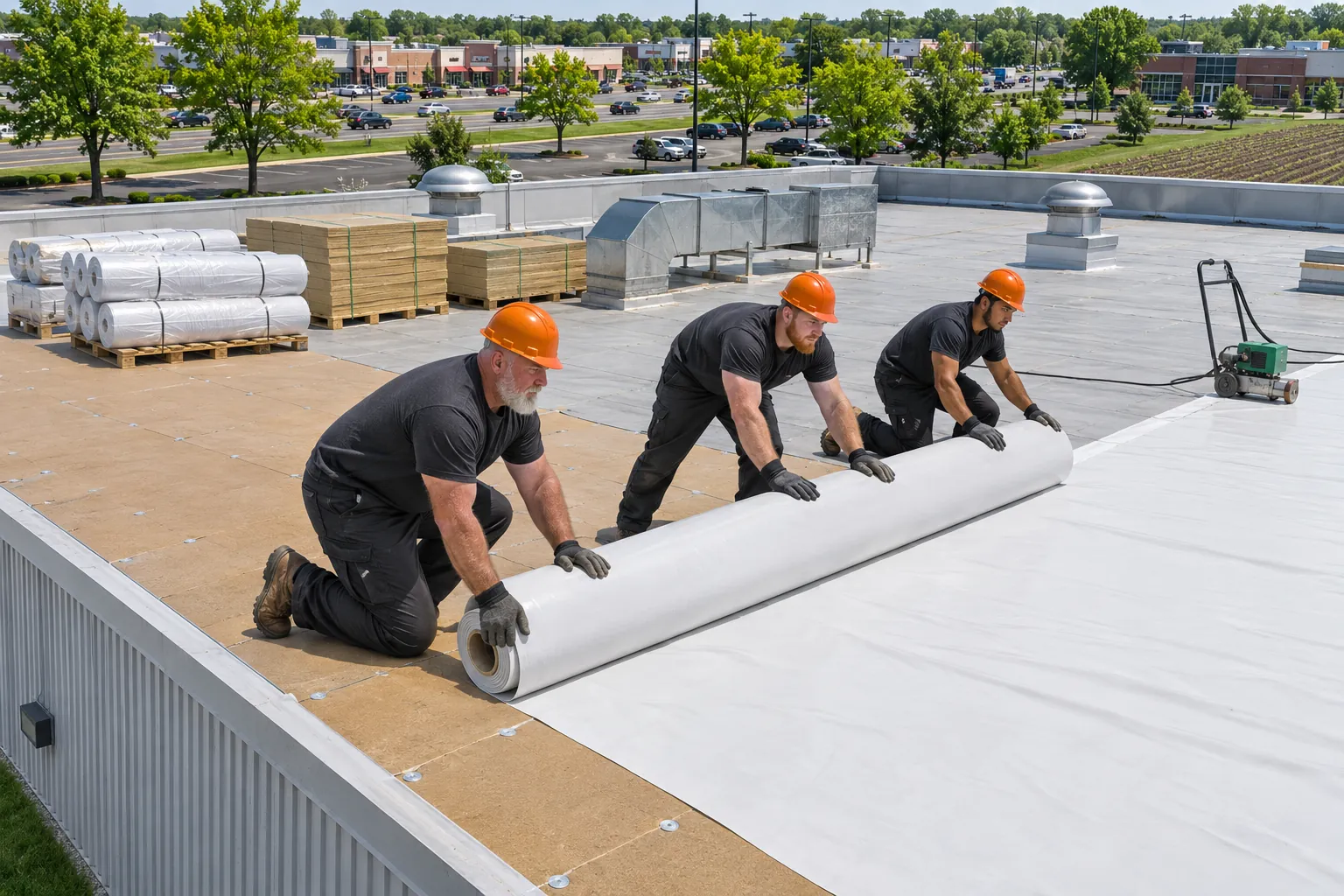
As a Hobart commercial roofing contractor, we install industrial and commercial roofs on plants, shops, and warehouses, planned around the equipment on top.
Hobart commercial roofing jobs on plants and shops turn on how materials and equipment move across a busy roof.
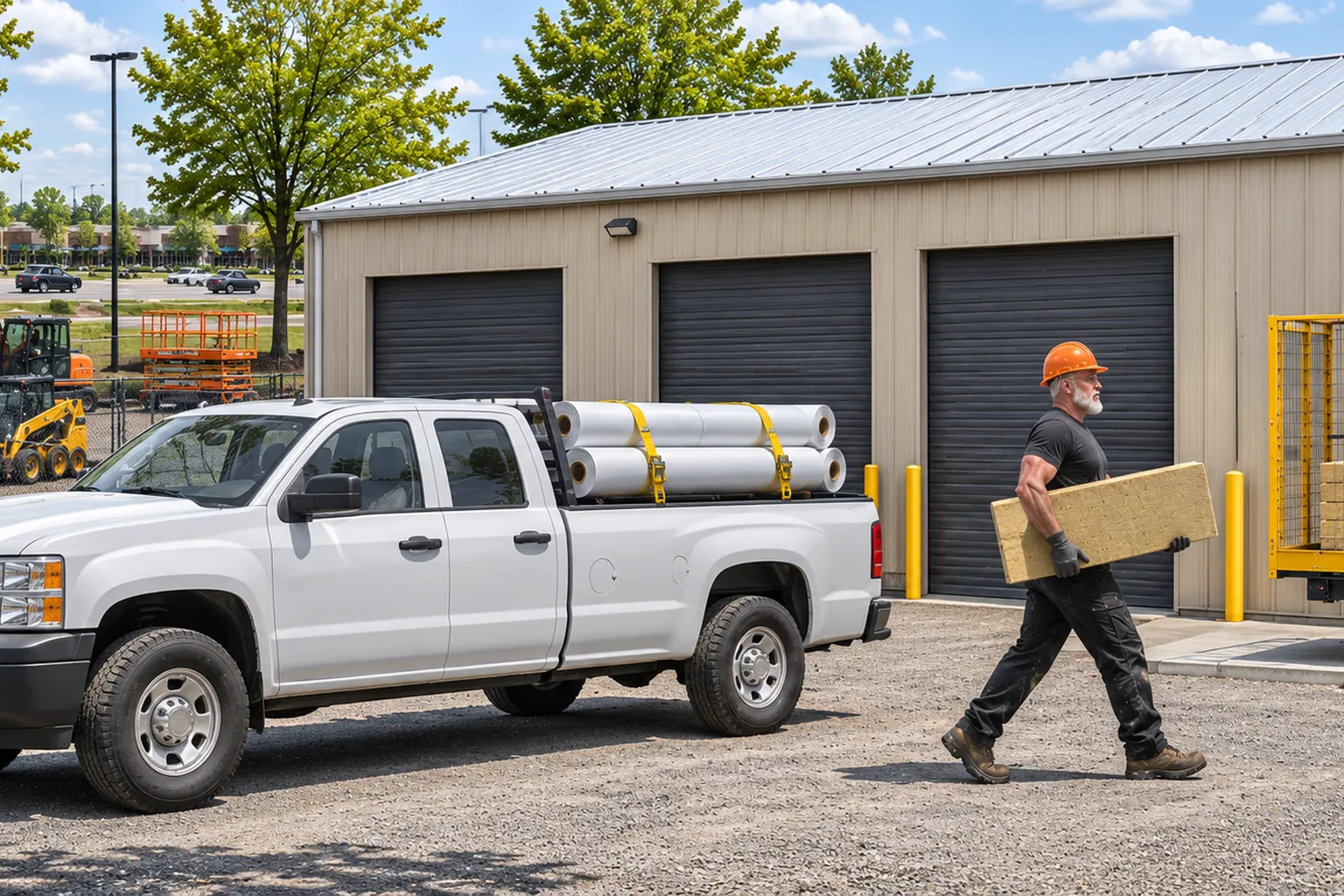
Industrial roofs in Hobart carry fans, stacks, and units that need steady service. Insulation, membrane rolls, and debris all have to cross the roof without blocking technicians or loading one spot of the deck.
We plan loading points, set-down areas, and paths with the facility manager, so the roof stays usable while the new system goes down around the equipment.
Equipment-heavy roofs wear out at the same five zones, starting near the busiest units.
Wall flashing behind tall equipment screens and exhaust stacks splits where the steel moves, sending water down the inside of the wall.
Membrane around service paths scuffs thin and punctures, especially where heavy parts are set down beside fans and units.
Drains near loading docks and equipment fill with debris, and water ponds against curbs that were set too low.
Stack collars, duct supports, and conduit runs pierce the roof every few feet, each a separate detail to seal.
Insulation under heavy units and set-down spots crushes, leaving low pockets that hold water and rust the deck.
A roof planned around equipment holds up to daily service and keeps the floor below dry.
Units and fans keep running while the roof around them is replaced, with lifts booked only where curbs must be raised.
Cover board and extra pads go where parts land, so the membrane takes tool drops without puncturing.
Low curbs are extended so new insulation and flashing reach a proper height above the finished roof.
Marked pads lead from the hatch to each unit, keeping service traffic on protected routes across the field.
Hobart plants, shops, and warehouses use one or more of these systems, often with a different system on the equipment roof than on the office wing.
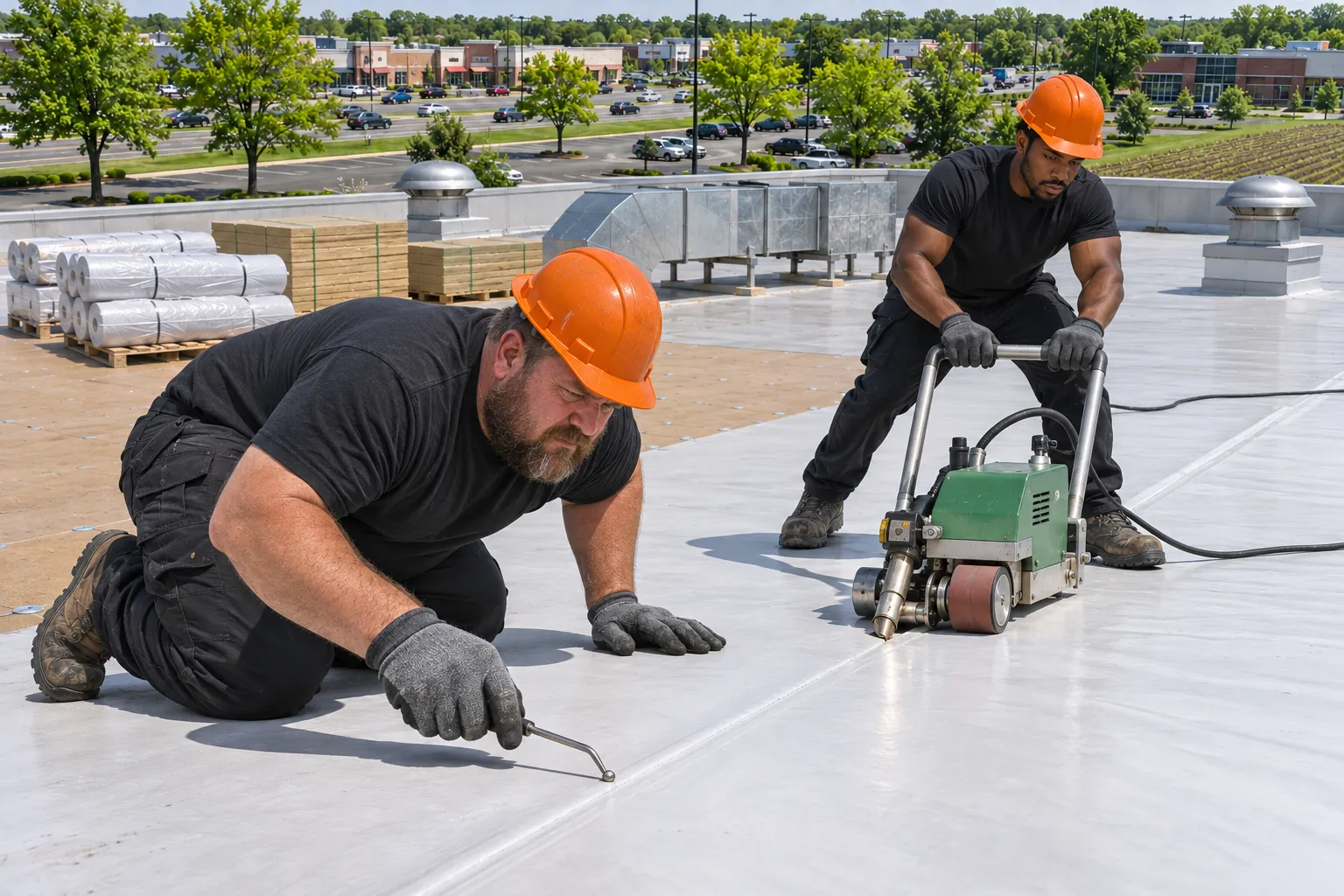
White sheet for warehouses with cooling loads.
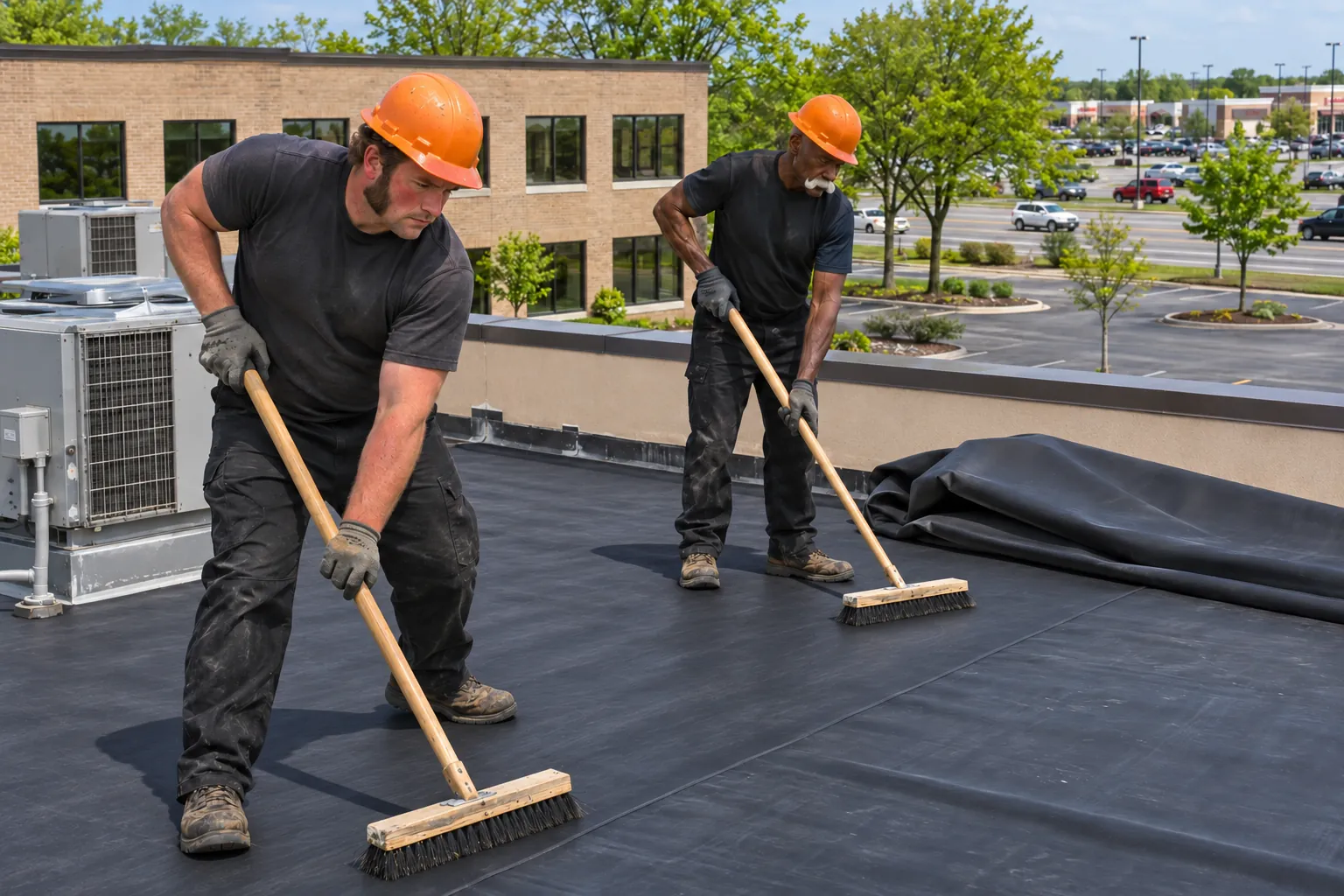
Rubber sheet for shops and offices with lighter traffic.
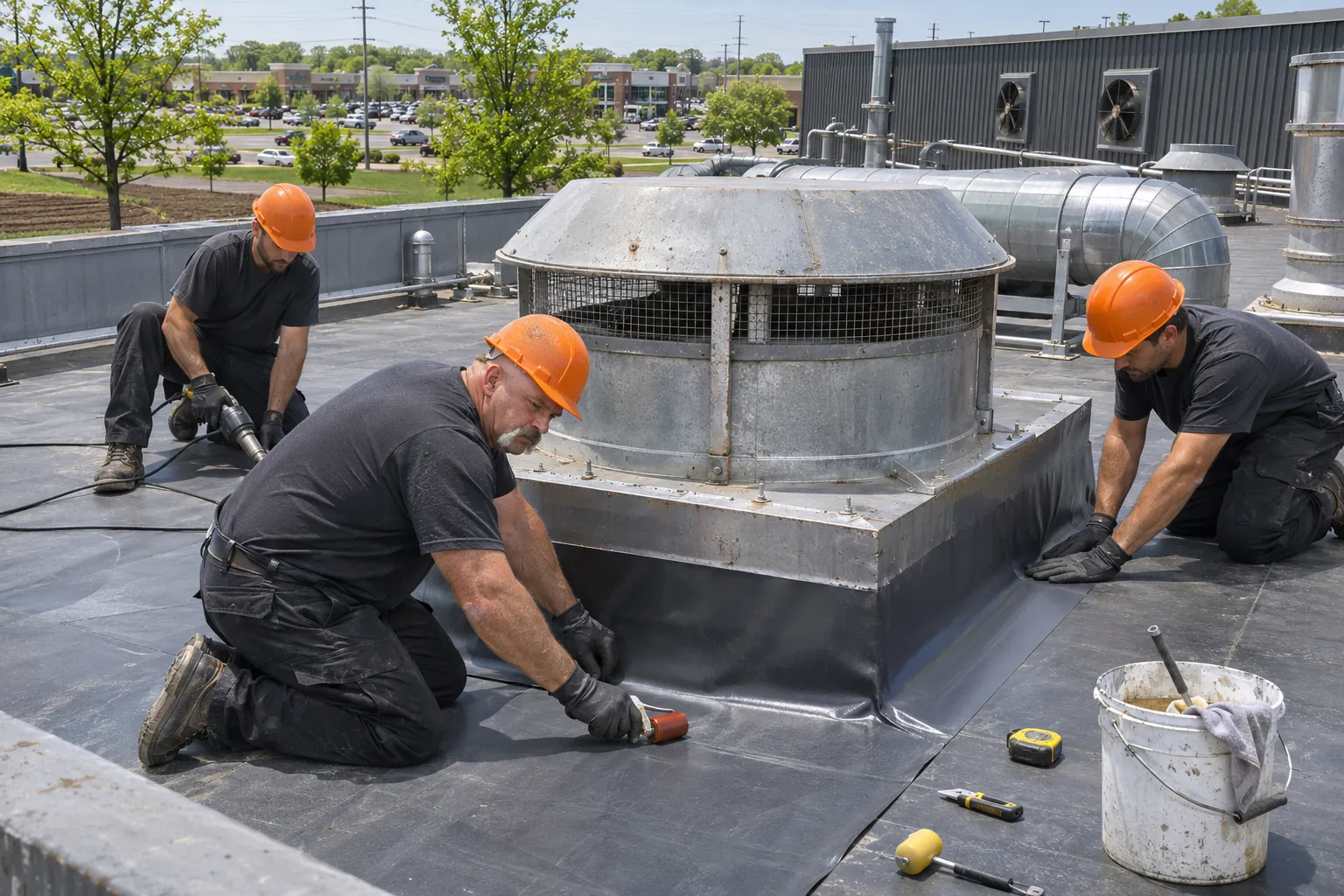
Plant roofs crowded with fans and stacks.
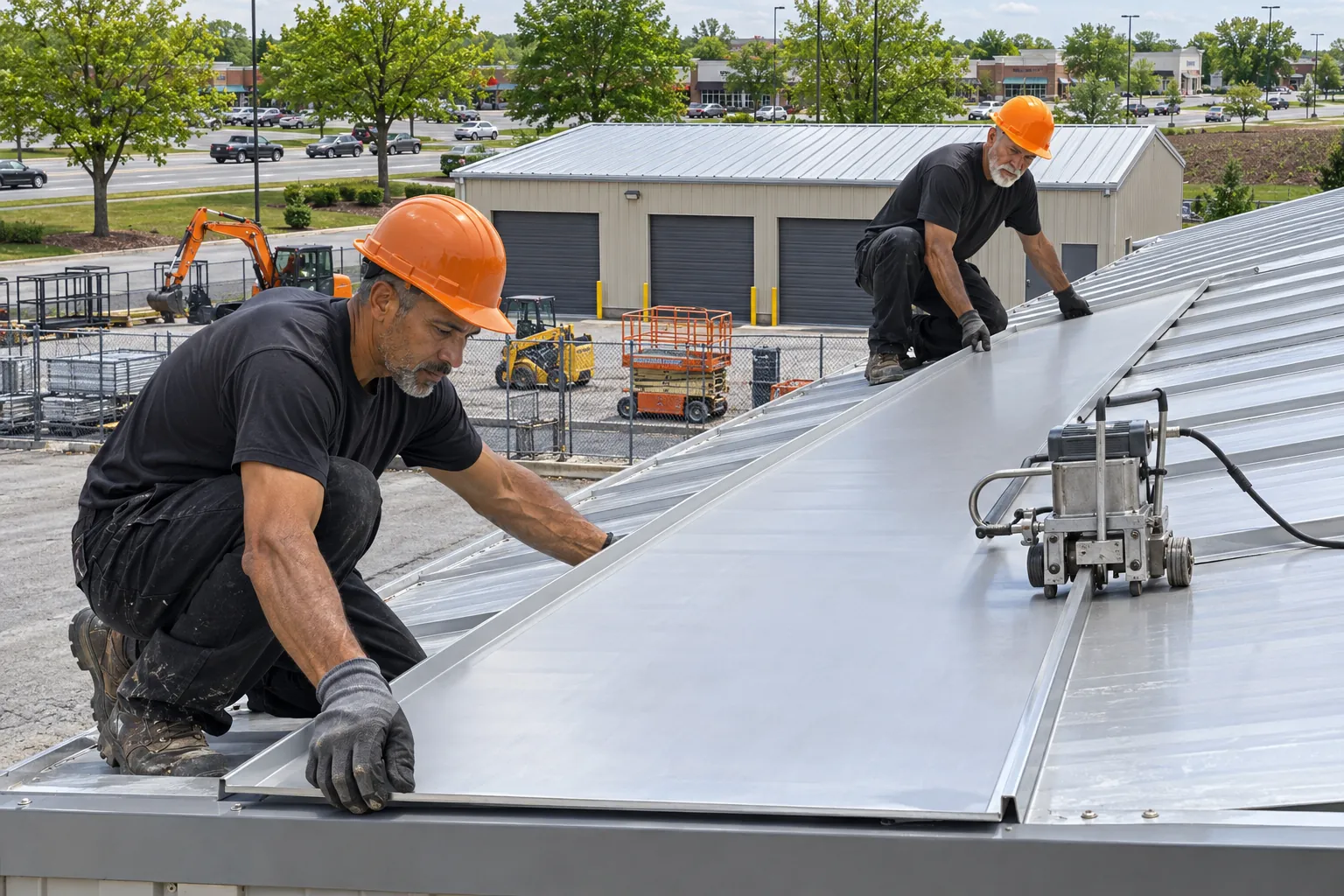
Panels for pitched shops and storage.
Send the address and the unit that is leaking. We will trace the drip to the curb, duct, or stack collar and plan the repair around your shifts and the equipment that has to stay on.
Call UsEquipment roofs add a staging plan to the usual roof walk.
We walk the roof with the facility manager, mark each unit and penetration, and note the routes technicians use.
Lift points, material set-down areas, and any unit lifts are scheduled so no part of the deck carries a heavy pile.
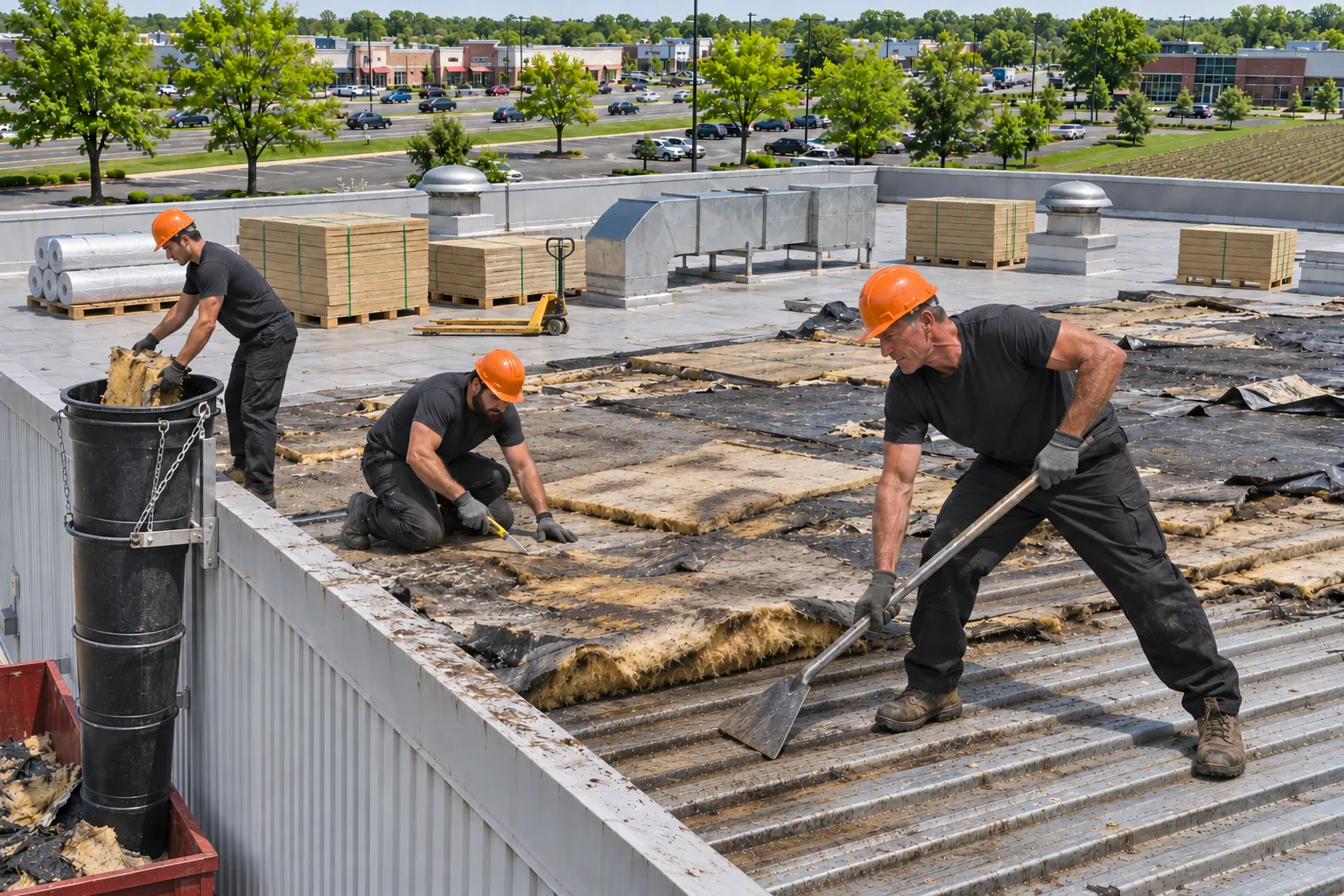
Sections around units are torn off, insulated, and membraned, with each curb, stack, and duct flashed before moving on.
Walkway pads go down on every path, and a final walk with the facility manager checks each unit and drain.
Temporary paths come up, the roof is cleared of scrap and fasteners, and service access is handed back to the maintenance staff.
Hobart is one of six towns we cover from Merrillville. For other locations, call us or send us a message.
Home base for retail, medical, and distribution roofs.
County seat with downtown flat roofs and warehouses.
Shopping strips and office parks on shared roofs.
Newer buildings mixing pitched metal and flat roofs.
Pole buildings, shops, and flat-roofed businesses.
Figures: 2020 U.S. Census counts, census.gov QuickFacts.
Yes, on plants, warehouses, and shops. These roofs carry heavy equipment, stacks, and frequent service traffic, so walkway pads, curb flashing, and drainage are planned up front and tear-off is staged so operations below continue.
Plant and shop roofs in Hobart are on our regular schedule from Merrillville. Call or send the address, and the roof walk is set with your facility manager.
We are. Roofs carrying fans, stacks, and units get a layout plan before tear-off, and lifts are coordinated with your mechanical contractor where curbs need raising.
Roof size, layers removed, deck repairs, insulation, membrane choice, and the number of curbs and penetrations. Unit lifts and phasing around production add to it, and the roof walk turns those into one price.
In most cases, yes. Units keep running while the roof around them is replaced, and only units whose curbs must be raised are shut down for a short lift.
Insulation, membrane rolls, and debris move along routes agreed with the facility manager, kept clear of the paths technicians use to reach units. Loads are spread across the deck instead of piled in one spot, and lifts are timed for shift changes or slower hours whenever the plant allows.
Send the plant address and the equipment on the roof, and we will plan the roof walk.