Edge And Parapet
Termination bars loosen along the parapet and let the membrane slide. Sealant at the coping dries out, and water tracks behind the wall flashing.
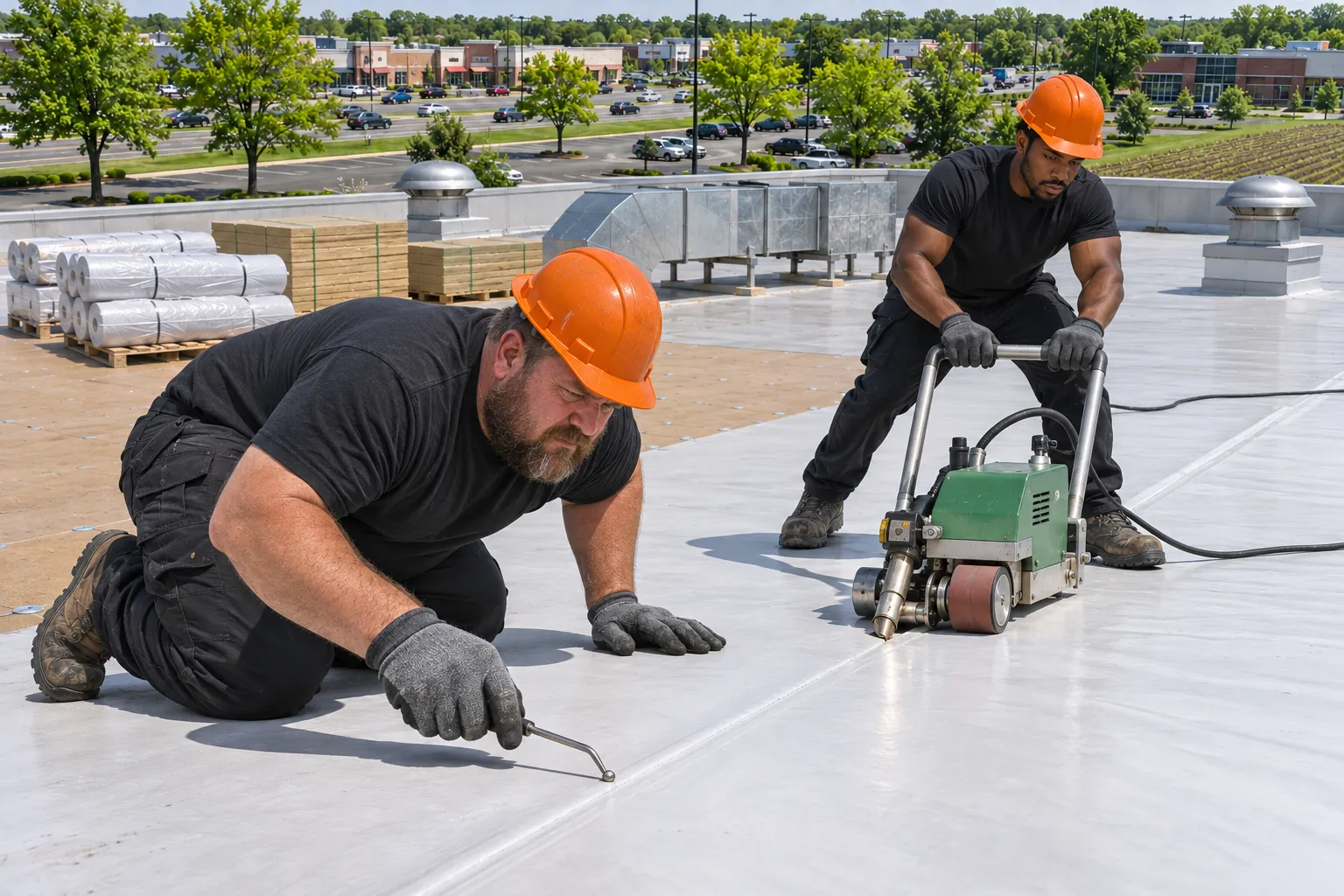
As a Merrillville TPO roofing contractor, we install white heat-welded membrane on warehouses, strip centers, and offices, fastened or adhered over new insulation.
Merrillville TPO roofing fits some roofs right away and others only after repairs. Match what you see to the job that usually follows.
| What You See On The Roof | New TPO After Tear-Off | TPO Recover | Repair The Old Roof |
|---|---|---|---|
| Flat roof, dry insulation, one existing layer | Sometimes | Usually Fits | Sometimes |
| Wet insulation across several bays | Usually Fits | Rarely | Rarely |
| Two layers already on the deck | Usually Fits | Rarely | Sometimes |
| A single leak at one curb | Rarely | Rarely | Usually Fits |
| Ponding that needs tapered insulation | Usually Fits | Sometimes | Rarely |
Core cuts confirm the insulation is dry before any recover is proposed.
Older white roofs wear out in predictable spots. These are the five we probe on every TPO roof before deciding what it needs.
Termination bars loosen along the parapet and let the membrane slide. Sealant at the coping dries out, and water tracks behind the wall flashing.
Welds that were cooked too cold peel back at the lap edge. A probe run along every seam finds the weak spots before rain does.
Drain clamping rings lose their grip as the deck flexes, so water slips under the membrane at the bowl and shows up as a ceiling stain.
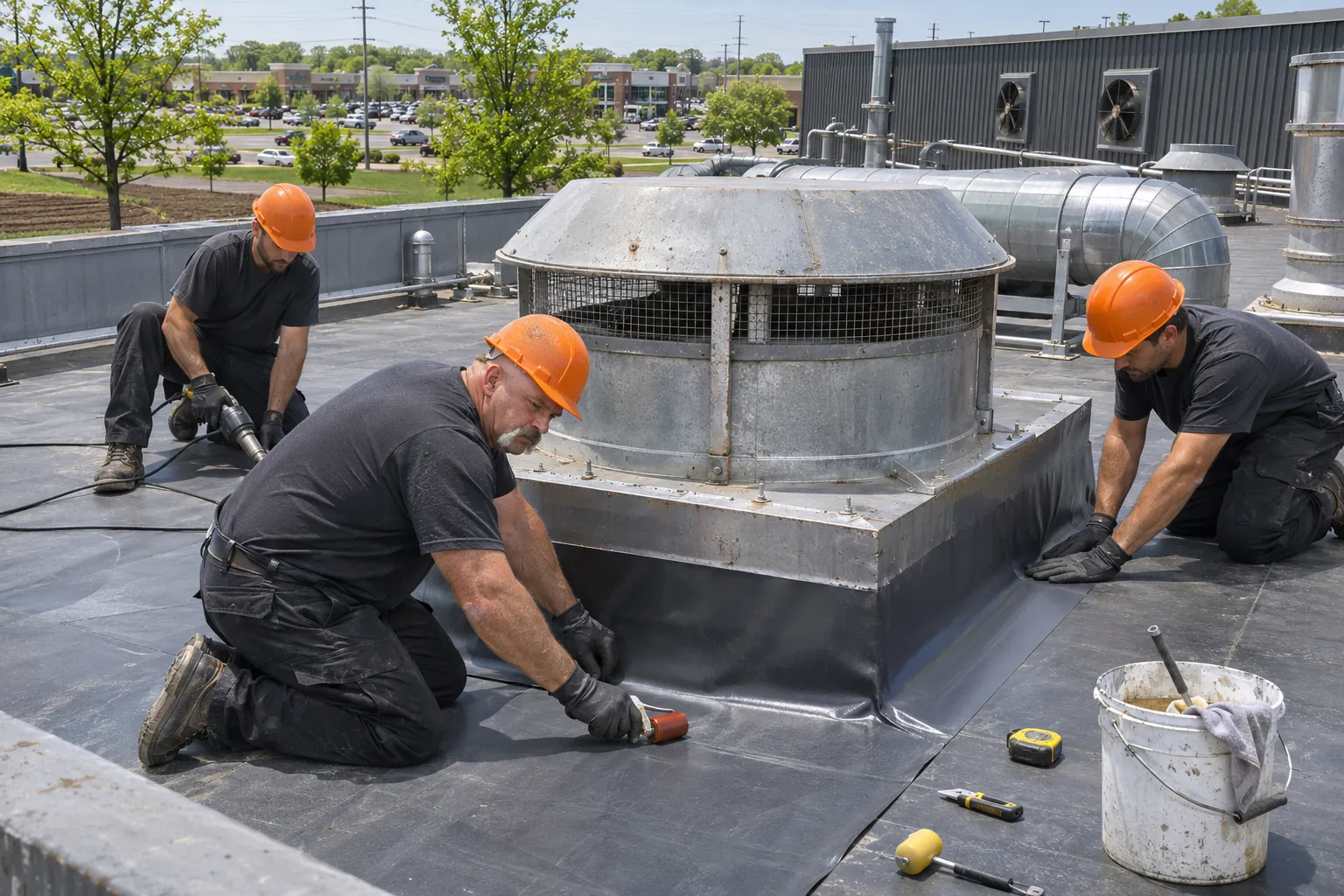
Curbs flashed with a short base let water over the top during snowmelt. Pipe boots crack in the sun and open around the vent stacks.
Fasteners rusted by trapped moisture back out of the deck. Insulation boards that took on water crush under foot and leave soft spots.
Four choices shape a TPO roof. Each one is set by the deck, the traffic, and the budget.
Sixty-mil sheet covers most retail and office roofs. Eighty-mil adds wear layer for roofs that see technicians every week or carry heavy equipment.
Plates and screws hold the sheet on most steel decks and install in any season. Adhered sheet suits roofs with many penetrations and quieter attachment.
Cut boards build slope toward drains, so a flat deck sheds water instead of holding ponding rings for days after rain or snowmelt.
Where the old roof stays, a cover board goes over it to give the new membrane a flat, firm base and separate it from the old surface.
A new white membrane changes how the roof handles heat, traffic, and water on a large building.
White sheet reflects much of the summer sun that a dark roof soaks up, keeping the deck and the insulation under it cooler through July heat.
Hot-air welds fuse each lap, so the seams become part of the membrane rather than a strip of glue that dries out after a few winters.
Pre-formed corners and boots wrap curbs and pipes, closing the spots where older roofs on big warehouses leaked first.
Punctures from dropped tools are cut out and a patch is welded over the hole, matching the original sheet years after the install.
Send the address and where the seams are opening. A probe test on the roof walk shows whether the welds can be repaired or the sheet needs replacing.
Get A Free EstimateA TPO install follows the same order on every roof, from cores to the last weld check.
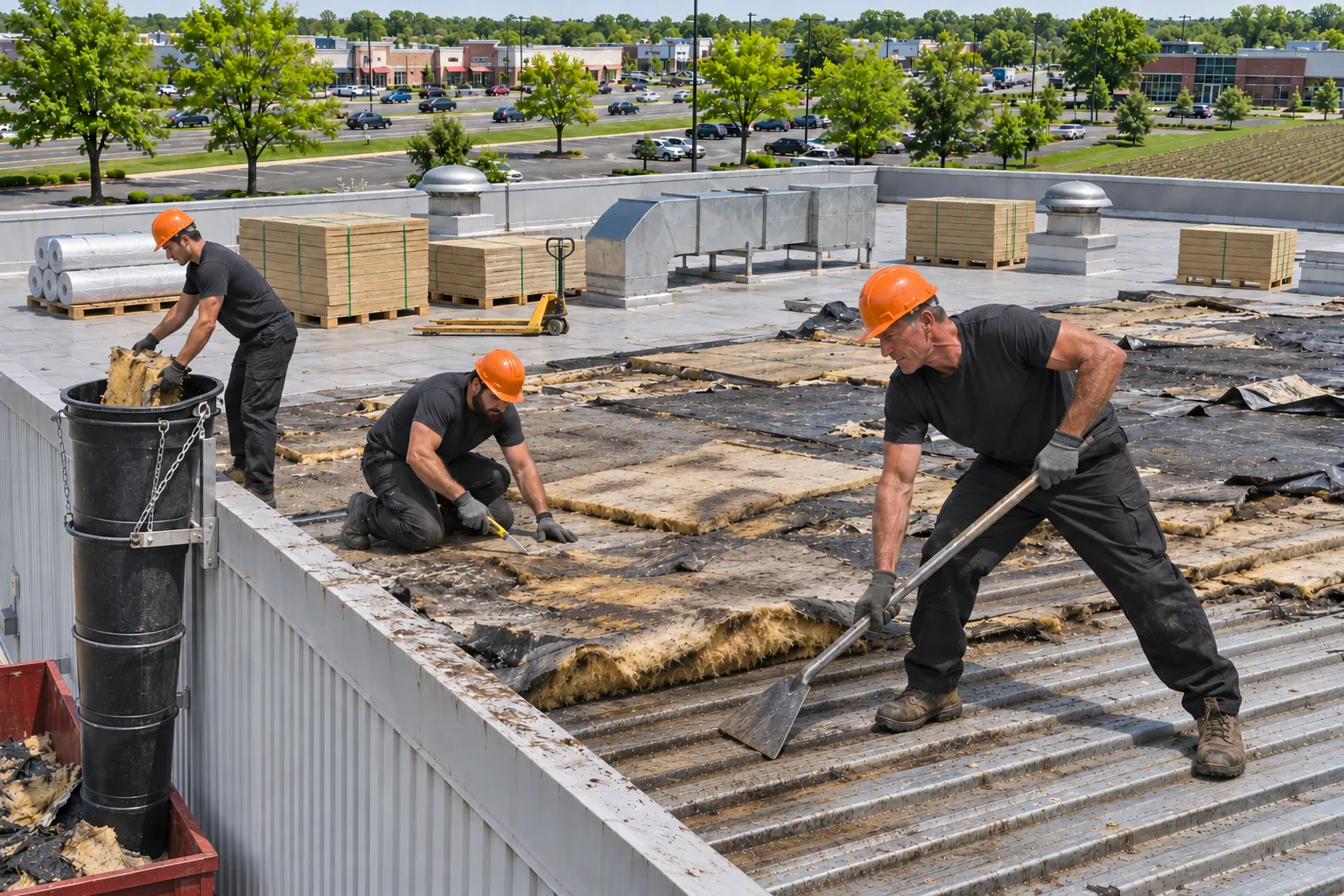
Core cuts confirm what stays and what comes off, and the roof is laid out in sections sized for one day of tear-off and welding.
Soft or rusted deck is replaced, then tapered insulation goes down to carry water to the drains, fastened or set in adhesive.
Rolls are laid with the laps facing downslope, welded with hot air, and probed along every seam before the crew leaves.
Curbs, boots, drains, and walls get their flashing, walkway pads go down on service paths, and a final walk checks every weld with you.
Some buildings need a different system on all or part of the roof.
Rubber sheet that stays flexible in hard freezes.
Plant and warehouse roofs laid out around equipment.
Panels for pitched roofs, shops, and retrofit slope.
Yes. The sheet stays flexible in the cold, and hot-air welds work at low temperatures on a dry surface. Bonding adhesive has temperature limits, so winter jobs lean on fastened sheet or cold-rated adhesive, and snow and frost are cleared before a roll is laid.
Some do. Twenty to thirty years is the usual span, and the long end comes from 60- or 80-mil sheet, careful welds, good drainage, and regular checks. Ponding, punctures from foot traffic, and neglected flashing shorten it most often.
The sheet punctures more easily than thicker systems, so busy roofs need walkway pads. Seam strength depends on the welder and the heat setting, and formulas differ between makers. Probing each weld and padding around units keeps those risks in check.
White TPO reflects heat and has welded seams that handle busy roofs well. Black EPDM stays flexible in deep cold and patches easily. Warehouses with heavy cooling loads lean toward TPO, while roofs that need cold flexibility and simple repairs lean toward EPDM.
Somewhat. Dark roofs run far hotter than the air, which dries sealants and stresses seams as the sheet moves. White TPO stays cooler, and pairing it with added insulation cuts the heat moving down into the building.
It depends on the roof size and how many tenant spaces it covers. Each storefront section is torn off, insulated, and welded before the crew moves on, and the schedule is set with the owner before the first section opens.
Send the address and what the roof is doing, and we will set up a roof walk with core cuts.