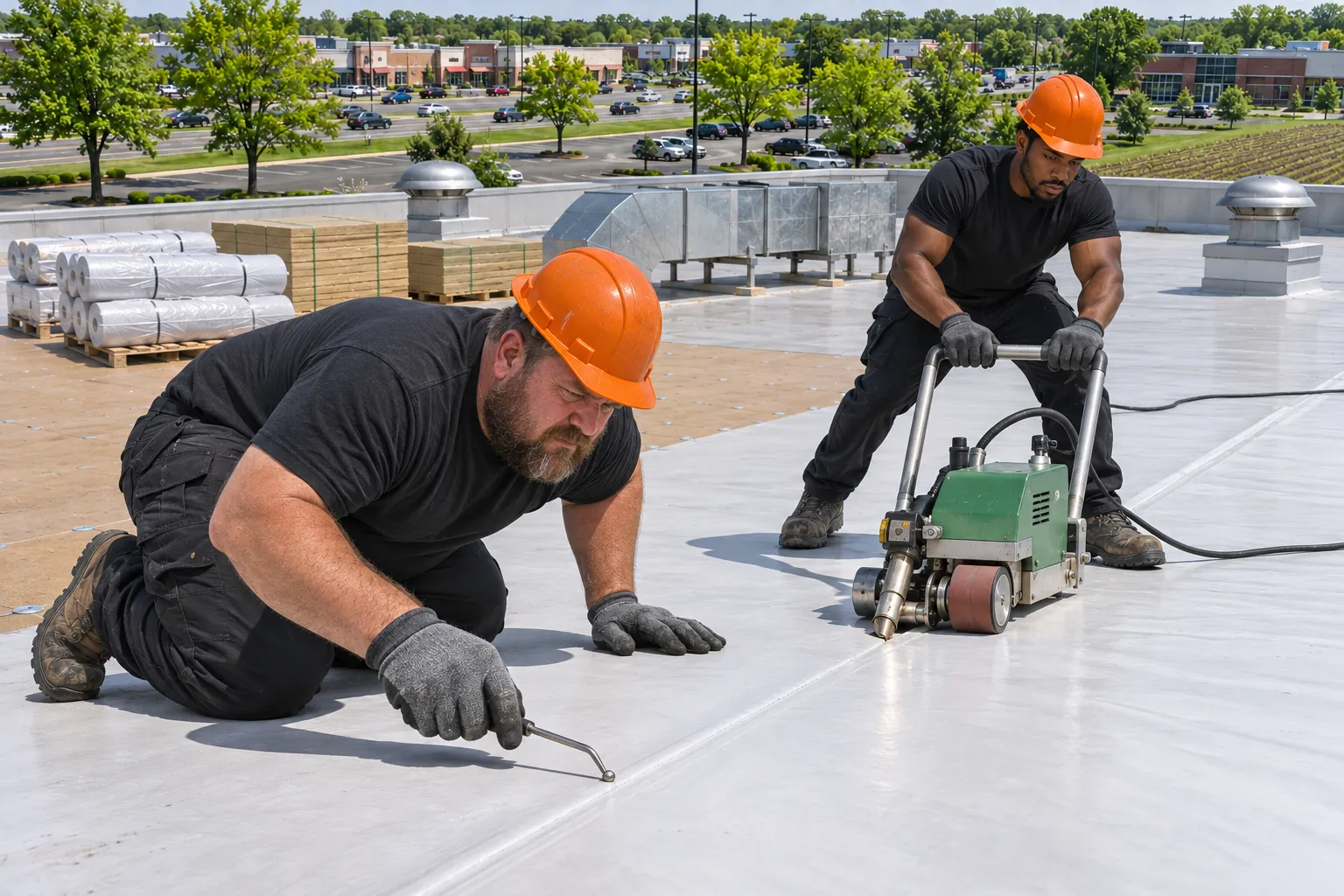
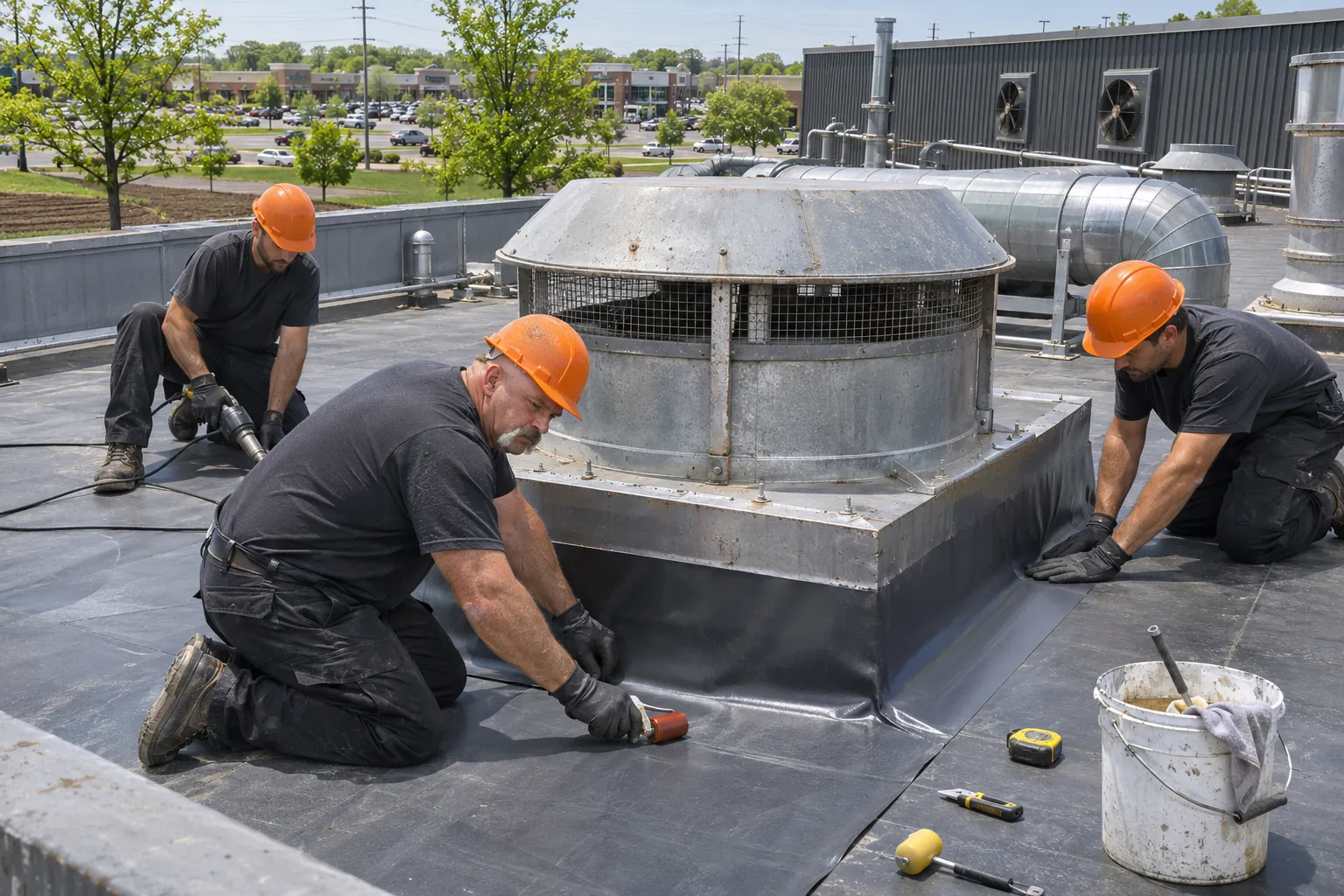
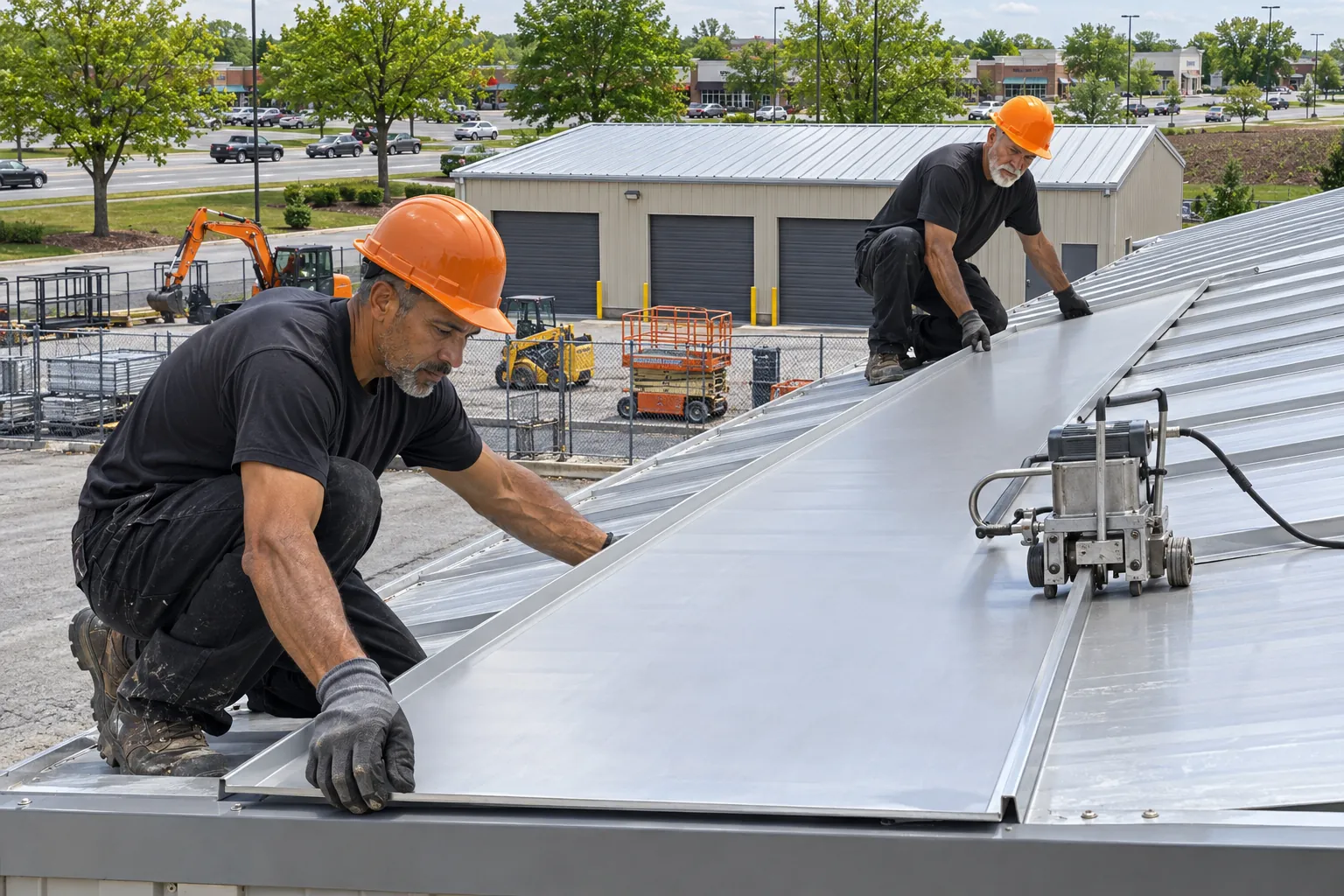
Edge And Parapet
Shrinking membrane pulls the wall flashing away from the parapet, opening a gap at the top of the base where wind-driven rain gets in.
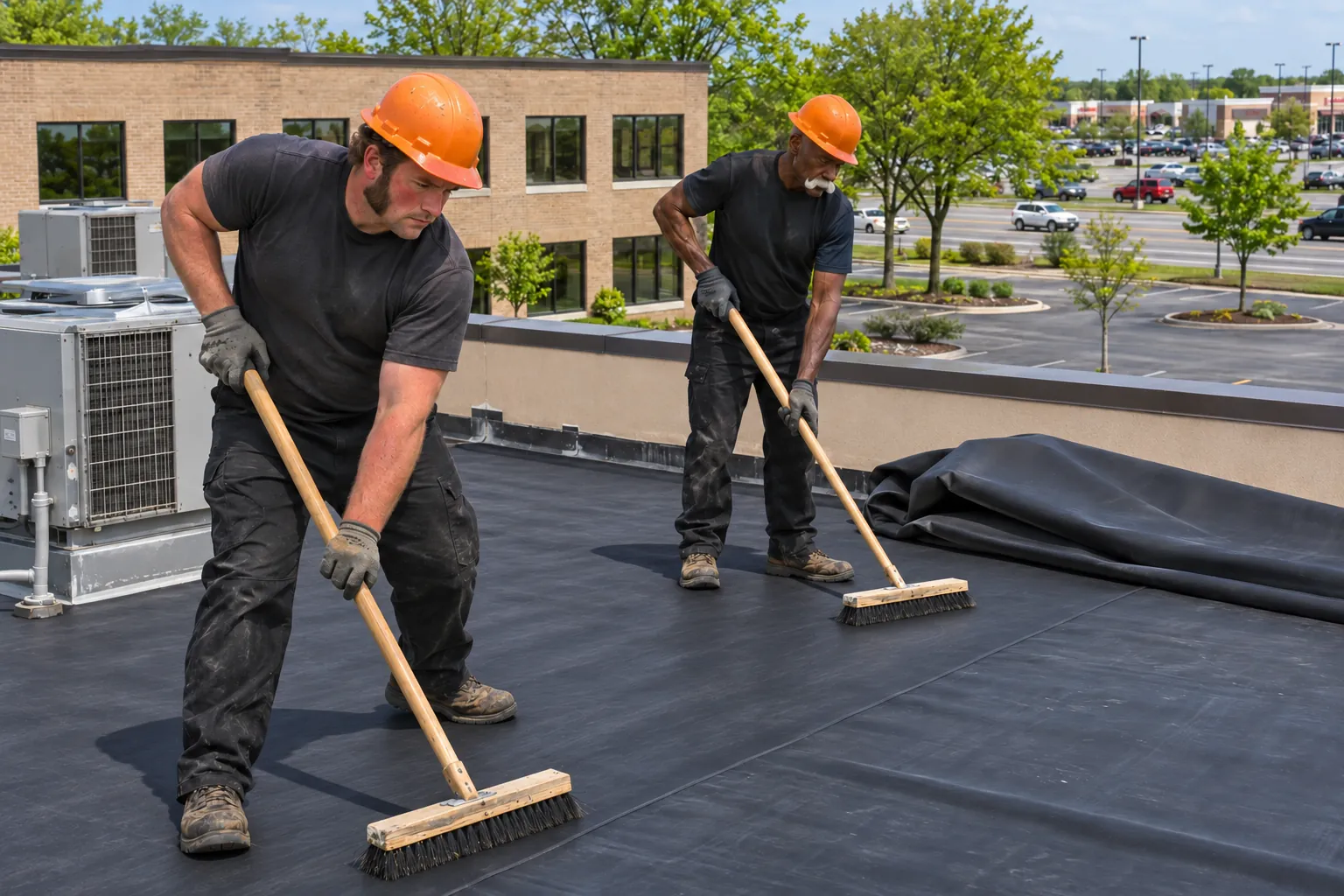
As a Merrillville EPDM roofing contractor, we install black rubber membrane on low-slope commercial roofs, fully adhered or ballasted, with new seams and flashing.
Merrillville EPDM roofing goes down two main ways, and some roofs point to another system entirely.
| What You See On The Roof | Fully Adhered EPDM | Ballasted EPDM | Another System |
|---|---|---|---|
| Many curbs, pipes, and equipment stands | Usually Fits | Rarely | Sometimes |
| Open field, few penetrations, strong deck | Sometimes | Usually Fits | Rarely |
| Heavy daily foot traffic to units | Sometimes | Rarely | Usually Fits |
| Deep snow drifts against higher walls | Usually Fits | Sometimes | Rarely |
| Steep pitched roof on a shop or office | Rarely | Rarely | Usually Fits |
Ballast needs a deck rated for the stone weight, checked before it is proposed.
Rubber roofs fail at the edges and joints long before the sheet itself wears through.
Shrinking membrane pulls the wall flashing away from the parapet, opening a gap at the top of the base where wind-driven rain gets in.
Glued seams on older roofs dry out and lift. Water slips under the lap, freezes, and pries the joint a little wider every winter.
Sheet around a drain wrinkles as it shrinks, breaking the seal at the clamping ring. Water then runs under the field toward the lowest point.
Pipe boots crack and split, and curb flashing tears where the membrane has tightened over the corner of each unit.
Ballasted roofs hide wet insulation under the stone. Soft spots and a heavy feel underfoot point to boards that need replacing.
An EPDM roof is built from a few choices about thickness, attachment, and seams.
Sixty-mil rubber covers most offices and retail roofs. Ninety-mil adds thickness where traffic or hail exposure is heavier than usual.
Bonding adhesive holds the sheet to a cover board, which resists wind uplift and keeps the membrane tight around curbs and penetrations.
River stone holds the membrane down on strong decks with few penetrations. It installs quickly but adds weight the structure has to carry.
Factory tape replaces the liquid seam glue that older roofs used, and cover strips go over each lap at walls and curbs.
Rubber membrane suits buildings that need a quiet, steady roof through hard winters.
EPDM keeps its stretch well below freezing, so the sheet moves with the deck instead of cracking during the coldest weeks of the year.
Rolls up to fifty feet wide cover big areas in one piece, leaving fewer seams to open on a large office roof.
Holes are cleaned, primed, and covered with matching rubber and tape, so a repair ten years on bonds like the original.
Adhered EPDM goes down without welding equipment or loud fastening runs, which helps on medical buildings that stay open during the work.
That is usually membrane shrinkage. Send the address and we will check whether new flashing fixes it or the sheet needs replacing.
Get A Free EstimateEach EPDM install follows the same order, from the first core to the last cover strip.
Cores show what the old roof hides, and measurements set the sheet layout so seams land away from drains and low spots.
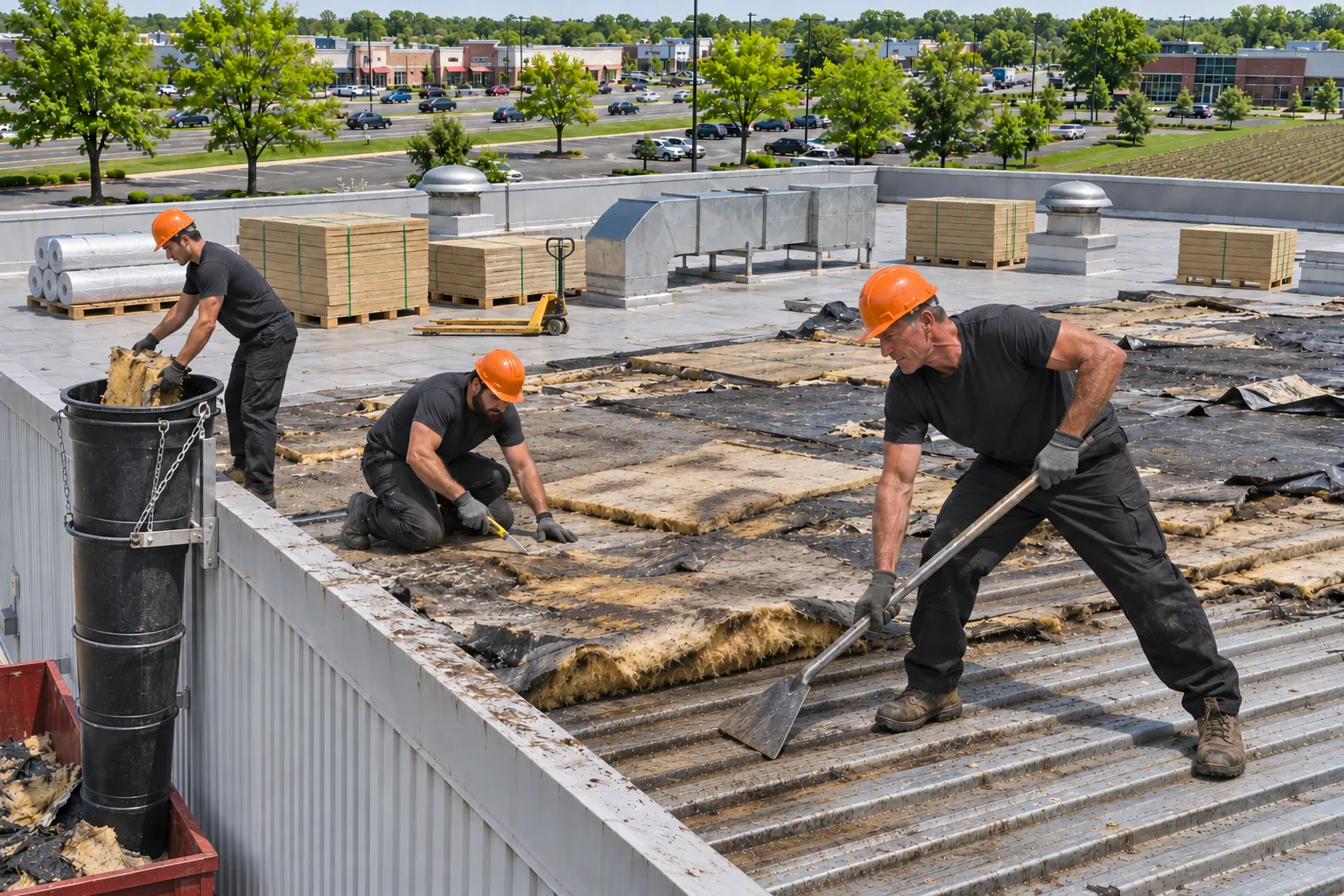
Old layers come off where needed, deck repairs go in, and insulation with a cover board is fastened down to take the adhesive.
Sheets are unrolled, relaxed, and glued down, or laid loose for ballast, with factory tape at each lap and cover strips at the edges.
Walls, curbs, boots, and drains get new flashing, then a final walk with you checks every seam and termination.
Where rubber is the wrong match, one of these systems usually fits.
White welded membrane for busy low-slope roofs.
Plant and warehouse roofs laid out around equipment.
Panels for pitched roofs, shops, and retrofit slope.
The sheet itself handles them well because it stays flexible. Trouble starts at seams, flashing, and penetrations, where water gets in, freezes, and pries joints open. A spring check of seams, pipe boots, and perimeter flashing catches that damage early.
Twenty to thirty years is typical. Thickness, attachment, drainage, and seam upkeep decide where a roof falls in that range, and roofs that drain well and get regular seam and flashing checks outlast roofs left until a leak shows.
Opening seams, shrinkage that drags flashing off walls and curbs, punctures, and leaking pipe boots top the list, and older glued seams open most. Fixes use tape and cover strips at seams, new flashing where the sheet shrank, and matching rubber patches.
Adhered sheet is glued to the insulation or cover board, resists wind, and handles many penetrations. Ballasted sheet sits under stone, goes down faster, adds weight, and hides leaks. Roofs with heavy equipment lean adhered, and ballast needs a deck rated for the load.
Walk it for bruised membrane, split seams, punctures, and dented flashing, skylights, and unit fins. Hail can crush insulation under the sheet without tearing it, so soft spots get a test cut, and photos record the damage for the file.
Over one dry layer, often yes, with a cover board between the old surface and the new sheet. Wet insulation or a second existing layer means tear-off first, and core cuts show which case applies before the scope is written.
Call or send the address to book a roof walk on your rubber roof.